the tropical fruit forum doesn't have a function to upload pics. just how useful is this function anyways? the correct answer can only be determined by each forum member using their donations (to the forum) to communicate their own personal perception of this function's usefulness. in the meantime, i'll use this entry to post pics for use on the forum.
Showing posts with label cold tolerance selection. Show all posts
Showing posts with label cold tolerance selection. Show all posts
Wednesday, May 17, 2023

Saturday, June 16, 2018
Update On Orchid Seeds That Germinated On My Tree
On the OrchidBoard, Camille1585 requested an update on the orchid seeds that germinated on my tree.
************************
In 2011 I sowed a bunch of different orchid seeds on my Cedar tree and much to my very pleasant surprise some of them actually germinated...
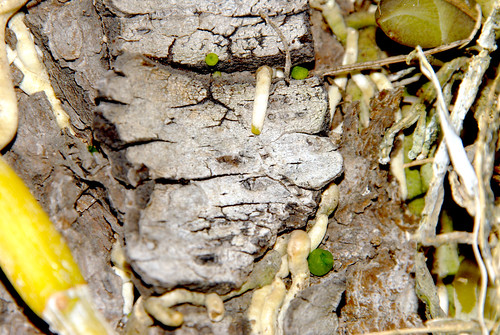
All the seedlings turned out to be Laelia anceps. Over the years I've documented the growth of the largest seedling...
December 2012
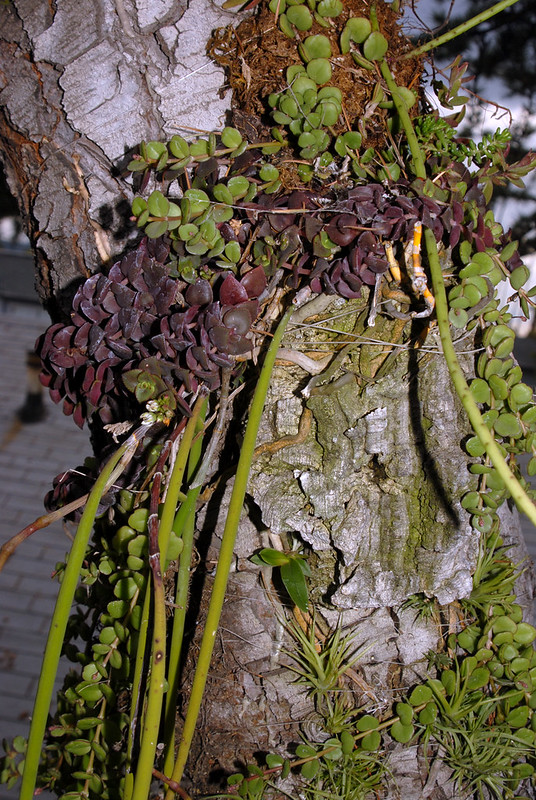
June 2013
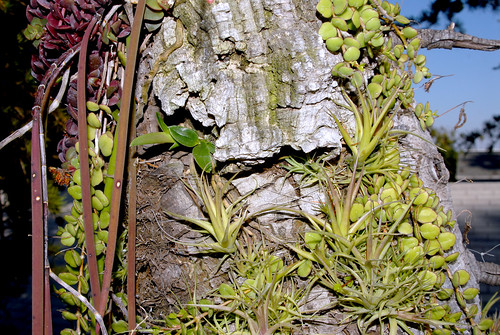
Dec 2013
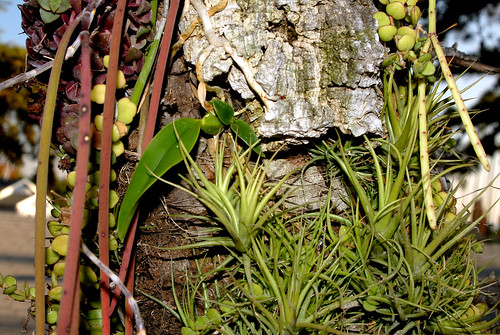
Aug 2014
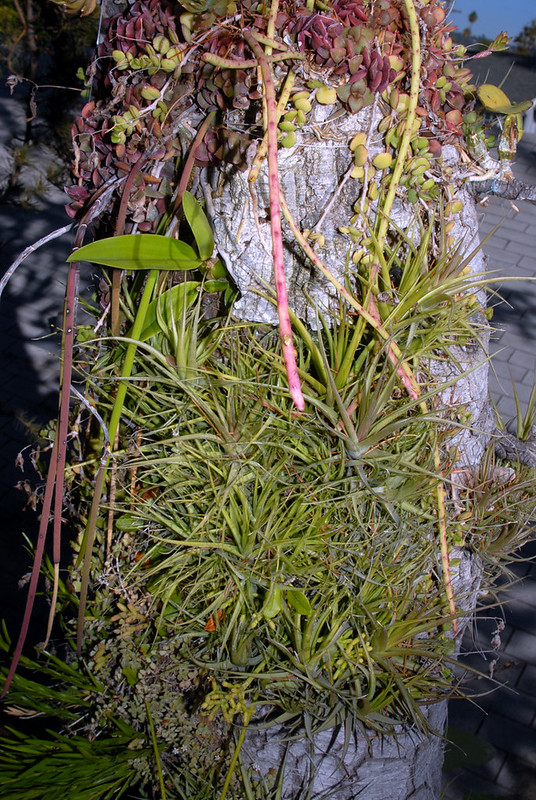
Nov 2014
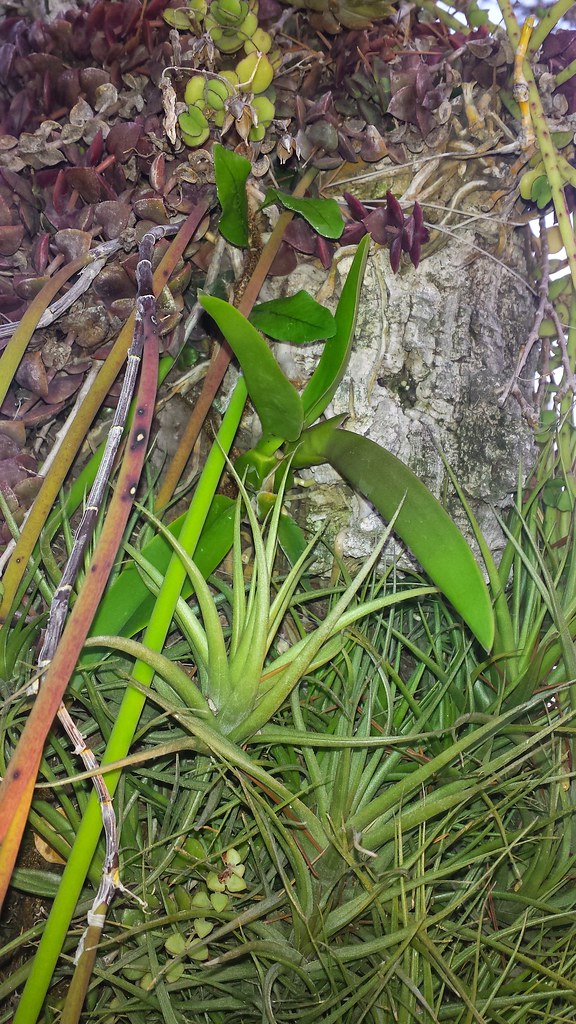
April 2016
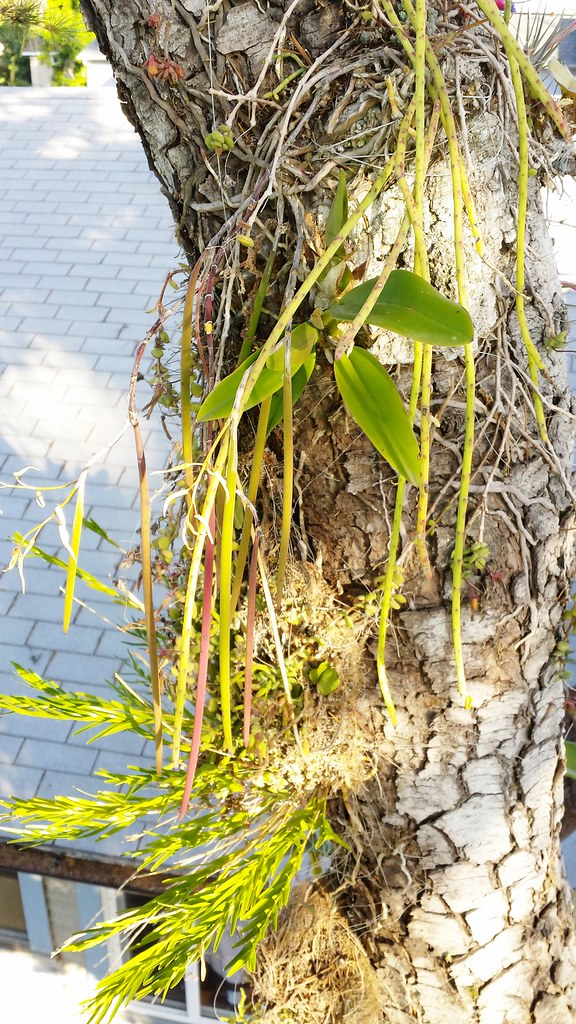
June 2018
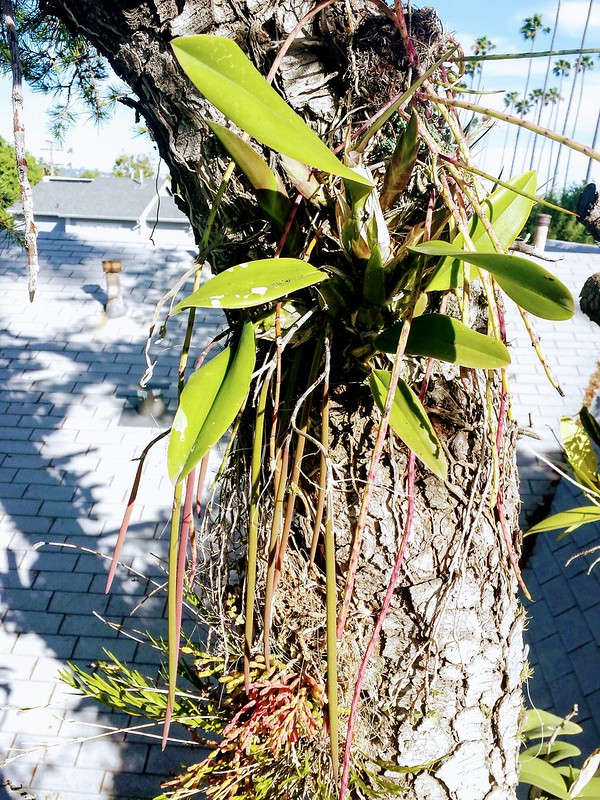
There's a really big disparity between the seedlings in terms of size. Here's one of the smallest seedlings...

What explains the remarkable size disparity? Is it because of the difference in the seeds and/or the difference in the microhabitats and/or the difference in the helper fungus?
The largest seedling germinated right next to the roots of a slow growing variety of Dendrobium teretifolium. Evidently the Dendrobium harbored a fungus in its roots that the Laelia seed was able to put to good use. Is this fungus from Australia like the Dendrobium, or from Mexico like the Laelia, or is it pantropical? In any case, given that the Laelia is in the process of outgrowing and overgrowing the Dendrobium, clearly it isn't always advantageous for an orchid to harbor fungus that can help germinate the seeds of unrelated orchids. I wonder whether the seeds of this Dendrobium would be able to germinate near the roots of this Laelia.
Right now the largest seedling has five new pseudobulbs starting to grow. In many, if not most, years its pseudobulbs mature around August and new ones would start to grow. They would mature late winter or early spring. Part of the reason for this is because this individual hasn't yet allocated any energy to blooming! It is definitely not precocious. The trade-off between growing and blooming is quite interesting.
Last year I removed two keikis from my very wonderful Dendrobium Gloucester Sands (discolor x canaliculatum) and attached them to boards...

The smaller keiki decided to put out roots and a new pseudobulb while the larger keiki decided to bloom. Blooming is very costly in terms of energy so, for a plant this size, I'd normally nip the spike in the bud, so to speak. In this case I decided to leave it for illustrative purposes. Some animal decided to mostly override my decision by eating all of the buds except for one.
The "pockets" made of shade cloth are filled with slow-release fertilizer granules. This effectively fertilizes all the mounted plants beneath it, but I really shouldn't have attached the pockets to the boards. Bundling the pockets and the boards discourages me from moving the boards. Instead, I should have made completely "independent" pockets. Another thing, seedlings and small newly mounted divisions don't respond well to lots of fertilizer.
Getting back to the Den Gloucester Sands, here are its roots growing on my Pachypodium lamerei...

Here's a video of it...
Diversity is the best. Last September I excitedly purchased a flask of Bc Beulah Bradeen (Cattleya walkeriana x Brassavola nodosa) from eBay. Both parents have done quite well for me so I was very curious to see whether their offspring might do even better. As per my standard operating procedure, I carefully mounted the largest seedlings on sections of trellis wood...

I distributed all the mounts throughout the garden. So far only around five seedlings survived the winter. And it was a pretty reasonable winter... it didn't even freeze.
Why did so many seedlings die? Was it primarily from a lack of heat? Or was it primarily from a lack of water? During winter, for most of my plants I drastically cut back on watering. In any case, given that a few seedlings survived, there's certainly variation in terms of the seedlings and/or the microhabitats.
One issue with flasks is that there's usually no selection in terms of drought tolerance. Last fall I had a relevant e-mail discussion with an orchid hybridizer in Australia who specializes in tea tree orchids. He had recently registered Dendrobium Ultraviolet, which is a cross between a less succulent orchid, Den Berry, and a more succulent orchid, Den canaliculatum. Even though the cross is 62.5% canaliculatum, it looks more like kingianum.
My theory is that, in a flask with adequate moisture, storing water is a disadvantage. Seedlings that are more succulent are going to lose the competition for limited space to the seedlings that are less succulent. So when a more succulent orchid is crossed with a less succulent orchid, if the seeds are flasked, then the seedlings will be less succulent.
I think the same concept must be true for temperature. If a cooler growing orchid (ie Den Berry) is crossed with a warmer growing orchid (ie Den canaliculatum), and the flasked seeds are kept cooler, then the seedlings will predominantly be cooler growers. I doubt that any professional flasking laboratories expose their flasks to temps as high as the temps that Den canaliculatum experiences in its native habitat. Basically, the deck is stacked against Den canaliculatum's warmer growing and drought tolerating traits.
Orchids populations, like all populations, conform/adapt to their conditions/environment. Here's the most relevant passage that I've found on the general topic...
What's very interesting to consider is what happens when an orchid is pollinated during the spring or fall here in Southern California. A few days ago the high temps were in the low 90s. Now the highs are in the low 70s. That's a pretty big range of high temps. Imagine how much impact this fluctuation would have on the race for the ovule. In theory the most hercuthermal genotypes should win the race.
Laelia anceps generally blooms from fall to spring... depending on the plant and its conditions. Honestly I don't even remember pollinating my Laelia anceps. For all I know the seeds that germinated on my tree were from a Laelia anceps owned by unknown neighbors. But in terms of adapting to SoCal's climate, it is advantageous for Laelia anceps to bloom when it does. Unfortunately, its blooming also coincides with my break from my plants. I think that, after the seeds germinated on my tree, I only once tried to pollinate my anceps, but no pods developed. Evidently the pollen that I used (ie Brassavola) was too different.
There have been a few other times when I sowed other orchid seeds on my tree. Only one of these other sowings was somewhat successful...
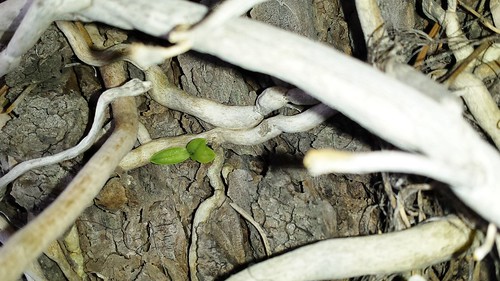
I noticed this NOID seedling in 2016. It germinated right next to the roots of a Vanda tricolor. I looked around and managed to spot a few other similar seedlings in the vicinity. It is definitely a sympodial orchid and its pseudobulbs and the undersides of its leaves are burgundy. When Camille1585 asked for an update on the Laelia anceps seedlings, I climbed the tree and noticed that one of these NOID seedlings was about to fall off because somebody, probably a squirrel, had dislodged the piece of bark that it was attached to. I carefully removed the seedling and attached it to a board...

If you zoom in you can see a bunch of reed-stem Epidendrum seeds germinating near the NOID seedling. My hope is that the helper fungus in the roots of the NOID seedling will inoculate the reed seeds. It's my best guess that, unlike other orchid seeds, reed seeds already have enough nutrients to germinate on their own. Even if this is the case I still want to help to spread the fungus that helped the NOID seedling germinate.
The board is sitting on my coffee table without any sort of covering and its right under a bendy octopus type lamp that stays on during the day. Right now the reed seeds are completely dry. Hopefully this is giving an advantage to the marginally more drought tolerant individuals.
Next to the NOID seedling's mount is another mossy mount that has a reed seedling on it...

Also on the board are some Echeveria gibbiflora seedlings and a Schlumbergera microsphaerica that I received last fall. The Schlumbergera grew quite well over the winter. I'm really happy with how well it has done even though the house was coldish during the winter. If anybody is interested, this species is currently for sale on eBay. The vendor also has some other interesting plants for sale.
Getting back to orchids, one of my very favorites is Dendrobium trilamellatum...
Last month mine bloomed for the first time. There were only two flowers. I really wasn't quite in my plant "mood" yet, but because I love this orchid so much, I knew that I'd be really disgruntled with myself if I didn't endeavor to put the pollen to good use. So I used the pollen to try and pollinate two closely related Dendrobiums...
Dendrobium canaliculatum x (parnatanum x trilamellatum)
Dendrobium canaliculatum x antennatum
Both these orchids now have a seed pod developing on them, but the first orchid's seed pod is twice as large. When the pods ripen should I sow the seeds on my tree? I'd like to, in order to select for the individuals that are best suited to my conditions, but I'm not confident that any seeds would germinate. Right now I'm leaning towards offering the seeds to the curator of the Huntington's succulent collection.... John Trager. A while back he had an Oncidium cebolleta cross flasked and the seedlings were included as part of the 2012 International Succulent Introductions (ISI). It was really great to see an orchid offered alongside the other succulent plants. Since that year no other orchid has been offered in the ISI so naturally I think it's time for another orchid, or two, to crash the succulent party.
If I was going to summarize all of this entry with one word... I'd go with "Californication". It's a show staring David Duchovny as a writer. Unfortunately the show isn't about plants but the word "Californication" strikes me as really relevant to the incredible and amazing and fascinating process of the millions and millions of non-native plants growing here in California being selected for, and adapting to, California's climate. Any Californian who grows non-native plants outdoors helps to facilitate this process, especially when they grow these plants from seed. In theory, since orchids produce so many seeds, they should adapt the fastest. But then there's the tricky issue that virtually all orchid seeds require fungus or flasking to germinate. Well, this issue is only tricky if we assume, or decide, that Californication is truly desirable.
Anybody else a fan of Blade Runner? The setting is Los Angeles in 2019. There's an abundance of flying cars, but a scarcity of plants. Personally, if we are going to err, then we should err on the side of too many plants. If we're going to give future people something to complain about, then let them complain about an abundance of plants. Let them complain that California has too many different varieties of tree Aloes that host too many different varieties of orchids that nourish too many different varieties of hummingbirds and harbor too many different varieties of lizards.
Maybe the one movie that best depicts how we should err is Annihilation. This passage comes to mind...
Here's a photo of orchids growing on leaves, here are some photos of an orchid blooming on a leaf, and here's a video of an orchid blooming on a leaf. Unfortunately I haven't seen a photo of an orchid growing on a spider's web, but I've seen plenty of spider webs on orchids. Maybe Sanford is correct that leaves and webs won't become important orchid habitats but, given that ants live inside the pseudobulbs of certain orchid species, and virtually all orchid seeds need a fungus in order to germinate, and there are many different orchids that are happy to grow on cactus, I personally wouldn't underestimate potential associations between orchids and other organisms.
[UPDATE]
The largest Laelia anceps bloomed on Jan 2019....


************************
In 2011 I sowed a bunch of different orchid seeds on my Cedar tree and much to my very pleasant surprise some of them actually germinated...
All the seedlings turned out to be Laelia anceps. Over the years I've documented the growth of the largest seedling...
December 2012
June 2013
Dec 2013
Aug 2014
Nov 2014
April 2016
June 2018
There's a really big disparity between the seedlings in terms of size. Here's one of the smallest seedlings...

What explains the remarkable size disparity? Is it because of the difference in the seeds and/or the difference in the microhabitats and/or the difference in the helper fungus?
The largest seedling germinated right next to the roots of a slow growing variety of Dendrobium teretifolium. Evidently the Dendrobium harbored a fungus in its roots that the Laelia seed was able to put to good use. Is this fungus from Australia like the Dendrobium, or from Mexico like the Laelia, or is it pantropical? In any case, given that the Laelia is in the process of outgrowing and overgrowing the Dendrobium, clearly it isn't always advantageous for an orchid to harbor fungus that can help germinate the seeds of unrelated orchids. I wonder whether the seeds of this Dendrobium would be able to germinate near the roots of this Laelia.
Right now the largest seedling has five new pseudobulbs starting to grow. In many, if not most, years its pseudobulbs mature around August and new ones would start to grow. They would mature late winter or early spring. Part of the reason for this is because this individual hasn't yet allocated any energy to blooming! It is definitely not precocious. The trade-off between growing and blooming is quite interesting.
Last year I removed two keikis from my very wonderful Dendrobium Gloucester Sands (discolor x canaliculatum) and attached them to boards...

The smaller keiki decided to put out roots and a new pseudobulb while the larger keiki decided to bloom. Blooming is very costly in terms of energy so, for a plant this size, I'd normally nip the spike in the bud, so to speak. In this case I decided to leave it for illustrative purposes. Some animal decided to mostly override my decision by eating all of the buds except for one.
The "pockets" made of shade cloth are filled with slow-release fertilizer granules. This effectively fertilizes all the mounted plants beneath it, but I really shouldn't have attached the pockets to the boards. Bundling the pockets and the boards discourages me from moving the boards. Instead, I should have made completely "independent" pockets. Another thing, seedlings and small newly mounted divisions don't respond well to lots of fertilizer.
Getting back to the Den Gloucester Sands, here are its roots growing on my Pachypodium lamerei...
Here's a video of it...
Diversity is the best. Last September I excitedly purchased a flask of Bc Beulah Bradeen (Cattleya walkeriana x Brassavola nodosa) from eBay. Both parents have done quite well for me so I was very curious to see whether their offspring might do even better. As per my standard operating procedure, I carefully mounted the largest seedlings on sections of trellis wood...

I distributed all the mounts throughout the garden. So far only around five seedlings survived the winter. And it was a pretty reasonable winter... it didn't even freeze.
Why did so many seedlings die? Was it primarily from a lack of heat? Or was it primarily from a lack of water? During winter, for most of my plants I drastically cut back on watering. In any case, given that a few seedlings survived, there's certainly variation in terms of the seedlings and/or the microhabitats.
One issue with flasks is that there's usually no selection in terms of drought tolerance. Last fall I had a relevant e-mail discussion with an orchid hybridizer in Australia who specializes in tea tree orchids. He had recently registered Dendrobium Ultraviolet, which is a cross between a less succulent orchid, Den Berry, and a more succulent orchid, Den canaliculatum. Even though the cross is 62.5% canaliculatum, it looks more like kingianum.
My theory is that, in a flask with adequate moisture, storing water is a disadvantage. Seedlings that are more succulent are going to lose the competition for limited space to the seedlings that are less succulent. So when a more succulent orchid is crossed with a less succulent orchid, if the seeds are flasked, then the seedlings will be less succulent.
I think the same concept must be true for temperature. If a cooler growing orchid (ie Den Berry) is crossed with a warmer growing orchid (ie Den canaliculatum), and the flasked seeds are kept cooler, then the seedlings will predominantly be cooler growers. I doubt that any professional flasking laboratories expose their flasks to temps as high as the temps that Den canaliculatum experiences in its native habitat. Basically, the deck is stacked against Den canaliculatum's warmer growing and drought tolerating traits.
Orchids populations, like all populations, conform/adapt to their conditions/environment. Here's the most relevant passage that I've found on the general topic...
An ovule is successfully fertilized by only one pollen grain out of (potentially) many thousands. If fertilization is performed at a sufficiently low temperature, the growth of chilling-resistant genotypes of pollen will be favored over others. These will reach the ovule first so that their genes will appear in the resulting seed. At no other stage of development can selection be made on such large numbers of genotypes. - Brad D. Patterson and Michael S. Reid, Genetic and Environmental Inlfuences on the Expression of Chilling Injury
What's very interesting to consider is what happens when an orchid is pollinated during the spring or fall here in Southern California. A few days ago the high temps were in the low 90s. Now the highs are in the low 70s. That's a pretty big range of high temps. Imagine how much impact this fluctuation would have on the race for the ovule. In theory the most hercuthermal genotypes should win the race.
Laelia anceps generally blooms from fall to spring... depending on the plant and its conditions. Honestly I don't even remember pollinating my Laelia anceps. For all I know the seeds that germinated on my tree were from a Laelia anceps owned by unknown neighbors. But in terms of adapting to SoCal's climate, it is advantageous for Laelia anceps to bloom when it does. Unfortunately, its blooming also coincides with my break from my plants. I think that, after the seeds germinated on my tree, I only once tried to pollinate my anceps, but no pods developed. Evidently the pollen that I used (ie Brassavola) was too different.
There have been a few other times when I sowed other orchid seeds on my tree. Only one of these other sowings was somewhat successful...
I noticed this NOID seedling in 2016. It germinated right next to the roots of a Vanda tricolor. I looked around and managed to spot a few other similar seedlings in the vicinity. It is definitely a sympodial orchid and its pseudobulbs and the undersides of its leaves are burgundy. When Camille1585 asked for an update on the Laelia anceps seedlings, I climbed the tree and noticed that one of these NOID seedlings was about to fall off because somebody, probably a squirrel, had dislodged the piece of bark that it was attached to. I carefully removed the seedling and attached it to a board...

If you zoom in you can see a bunch of reed-stem Epidendrum seeds germinating near the NOID seedling. My hope is that the helper fungus in the roots of the NOID seedling will inoculate the reed seeds. It's my best guess that, unlike other orchid seeds, reed seeds already have enough nutrients to germinate on their own. Even if this is the case I still want to help to spread the fungus that helped the NOID seedling germinate.
The board is sitting on my coffee table without any sort of covering and its right under a bendy octopus type lamp that stays on during the day. Right now the reed seeds are completely dry. Hopefully this is giving an advantage to the marginally more drought tolerant individuals.
Next to the NOID seedling's mount is another mossy mount that has a reed seedling on it...

Also on the board are some Echeveria gibbiflora seedlings and a Schlumbergera microsphaerica that I received last fall. The Schlumbergera grew quite well over the winter. I'm really happy with how well it has done even though the house was coldish during the winter. If anybody is interested, this species is currently for sale on eBay. The vendor also has some other interesting plants for sale.
Getting back to orchids, one of my very favorites is Dendrobium trilamellatum...
This robust epiphyte thrives in habitats in which few other orchids can survive. It occurs from a little south of Cooktown to the islands of Torres Strait, southern New Guinea and the Top End of the Northern Territory. It is a species of the very seasonal and hot open melaleuca woodlands where the wet season usually starts in December with occasional storms building to heavy rain in January to March, followed by a dry season in which virtually no rain falls from June to November. The Yellow Antelope Orchid flowers in spring (July to November) and the flowers are attractive, long lasting and pleasantly scented. They are about three to four centimetres across. In cultivation this species does moderately well, but must be given a dry season and the medium must be well drained. - Bill Lavarack, Bruce Gray, Australian Tropical Orchids
Last month mine bloomed for the first time. There were only two flowers. I really wasn't quite in my plant "mood" yet, but because I love this orchid so much, I knew that I'd be really disgruntled with myself if I didn't endeavor to put the pollen to good use. So I used the pollen to try and pollinate two closely related Dendrobiums...
Dendrobium canaliculatum x (parnatanum x trilamellatum)
Dendrobium canaliculatum x antennatum
Both these orchids now have a seed pod developing on them, but the first orchid's seed pod is twice as large. When the pods ripen should I sow the seeds on my tree? I'd like to, in order to select for the individuals that are best suited to my conditions, but I'm not confident that any seeds would germinate. Right now I'm leaning towards offering the seeds to the curator of the Huntington's succulent collection.... John Trager. A while back he had an Oncidium cebolleta cross flasked and the seedlings were included as part of the 2012 International Succulent Introductions (ISI). It was really great to see an orchid offered alongside the other succulent plants. Since that year no other orchid has been offered in the ISI so naturally I think it's time for another orchid, or two, to crash the succulent party.
If I was going to summarize all of this entry with one word... I'd go with "Californication". It's a show staring David Duchovny as a writer. Unfortunately the show isn't about plants but the word "Californication" strikes me as really relevant to the incredible and amazing and fascinating process of the millions and millions of non-native plants growing here in California being selected for, and adapting to, California's climate. Any Californian who grows non-native plants outdoors helps to facilitate this process, especially when they grow these plants from seed. In theory, since orchids produce so many seeds, they should adapt the fastest. But then there's the tricky issue that virtually all orchid seeds require fungus or flasking to germinate. Well, this issue is only tricky if we assume, or decide, that Californication is truly desirable.
Anybody else a fan of Blade Runner? The setting is Los Angeles in 2019. There's an abundance of flying cars, but a scarcity of plants. Personally, if we are going to err, then we should err on the side of too many plants. If we're going to give future people something to complain about, then let them complain about an abundance of plants. Let them complain that California has too many different varieties of tree Aloes that host too many different varieties of orchids that nourish too many different varieties of hummingbirds and harbor too many different varieties of lizards.
Maybe the one movie that best depicts how we should err is Annihilation. This passage comes to mind...
A few species of orchids are occasionally able to become established in very odd microhabitats. Withner (personal communication) reports seeing small orchids - probably Comparettia Poep. And Endl. - growing on mango leaves. Since the leaves last about three years, this suggests that the orchid may complete a life cycle within this relatively short time. Even more bizarre, Bowling (orchid propagator, Kew; personal communication) told me that he had once seen a tiny Microcoelia Lind. Growing on a spider's web in Ghana! I very much doubt, however, that either leaves or webs will ever become very important orchid habitats. - William W. Sanford, The Orchids, Scientific Studies
Here's a photo of orchids growing on leaves, here are some photos of an orchid blooming on a leaf, and here's a video of an orchid blooming on a leaf. Unfortunately I haven't seen a photo of an orchid growing on a spider's web, but I've seen plenty of spider webs on orchids. Maybe Sanford is correct that leaves and webs won't become important orchid habitats but, given that ants live inside the pseudobulbs of certain orchid species, and virtually all orchid seeds need a fungus in order to germinate, and there are many different orchids that are happy to grow on cactus, I personally wouldn't underestimate potential associations between orchids and other organisms.
[UPDATE]
The largest Laelia anceps bloomed on Jan 2019....


Tuesday, September 5, 2017
Nature Abhors A Vacuum
Reply to: Most Northern Florida location of tampensis?
********************************
Here's a distribution map of Encyclia tampensis. It doesn't appear that there are any records for Alachua county. For comparison, here's the distribution map of Epidendrum conopseum.
If I was in your shoes, I'd definitely try and grow Encyclia tampensis. You're right on the border of its natural limit. But you'd have to expect that, every once in a while, a particularly bad freeze might wipe out your tampensis. But if you spend $10 dollars for a tampensis, and get 5 years of enjoyment from it, then that's not the worst investment. In comparison, you only get 15 minutes of enjoyment from a $10 dollar meal.
I definitely wouldn't buy very many tampensis though. Instead, I'd buy a lot of conopseum crosses. Eplc Butterfly Kisses (Lc Trick or Treat x Epi. conopseum) isn't too shabby (photo). There's actually one available on eBay. I think it looks better than tampensis. Another cross available on eBay is Epi. conopseum x C. purpurata.
You're super fortunate that there's a vendor on eBay, bluemossguy, who regularly offers crosses with conopseum. Right now he's selling a flask of Epidendrum conopseum x Brassavola nodosa for only $15 dollars. What a great cross! I bought 3 seedlings of this cross from him a couple years ago and am really happy with them. I wish that I had gotten an entire flask. I could still do so, but it's hard to justify the purchase when I already have three plants of this cross.
Getting a flask is a good idea because you can expect some drought/temperature tolerance variation among the seedlings. The larger the pool of seedlings, the more closely suited some of them will be to your conditions. With this logic in mind, it would be optimal to sow as many seeds on your trees, and the street trees, and your neighbors' trees, as possible. I've had some success with this technique here in dry, parched and thirsty Southern California. So you should have a lot more success in rainy, wet and humid Florida.
There's a limit though to how many flowers you can personally cross-pollinate. You'd end up with a lot more seed pods if you recruited the natural pollinators. Bees are cool, but hummingbirds are the coolest. I've witnessed my hummingbirds trying to make all sorts of crazy crosses (ie Echeveria x Aloe). I've seen them visiting orchid flowers as different as Dendrobium bigibbum and Dockrillia teretifolia. Both orchids have ended up with pods.
Hummingbirds like to pollinate reed-stem orchids. Sunset Valley Orchids (SVO) sold a cross between a reed-stem and conopseum...
(Epi. Pacific Eclipse x Epi. Pacific Canary) 'SVO Yellow Sun' x Epi. conopseum 'SVO'
Not sure if there are any still available. My friend bought one and let me borrow it to try and cross it. There are two pods on it but they kinda stalled out. It does have a really nice keiki on it. The plant itself is a lot more like a typical reed-stem. But it's more stout and succulent. I think it might actually make a pretty great epiphyte.
Another orchid that hummingbirds love to pollinate is Broughtonia sanguinea. It's a really awesome orchid. Coincidentally, today I just harvested a pod that was made by a hummingbird. The plant had finished blooming a while back but when I went to harvest the pod, I noticed that the spike was just starting to produce more flowers. So you don't want to cut off a spike that's still green. This species is relatively drought tolerant, but it isn't very cold tolerant.
Sophronitis cernua is another great orchid that the hummingbirds love to pollinate. Not sure if I remember correctly, but I thought that bluemossguy sold crosses of it with conopseum.
There are lots of really fun and exciting possibilities! You can choose from numerous really different orchids. When you make your choices and attach them to trees, then nature (conditions/pollinators) can choose among them. You can then choose among nature's choices. This virtuous cycle is a cross between artificial selection and natural selection. It's so much teamwork that we can think of it as collaborative selection. Or holistic selection. Or some better term.
Way back when I used to be a species guy, but then I decided that I cared more about results. For me whether an orchid was a species or hybrid was less important than whether it thrived on a tree. Then I realized that slugs sure don't care whether an orchid is a species or hybrid! Neither do hummingbirds. Or the weather.
Nature definitely doesn't care whether an orchid is a species or hybrid. What she cares about is the conquest of space. Nature abhors a vacuum. She wants to fill Canada with epiphytes sooner rather than later. We can, and should, give her a hand.
I'm guessing that your society's input might be a little different? Heh. Variety is the spice of life. Let me know what your society says. And please share updates on your project.
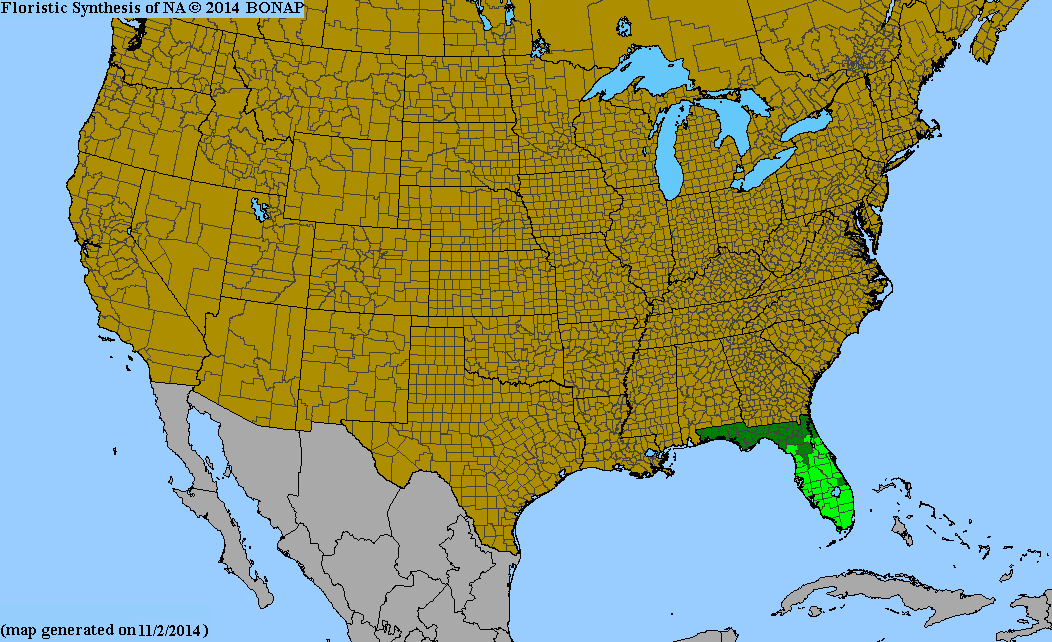
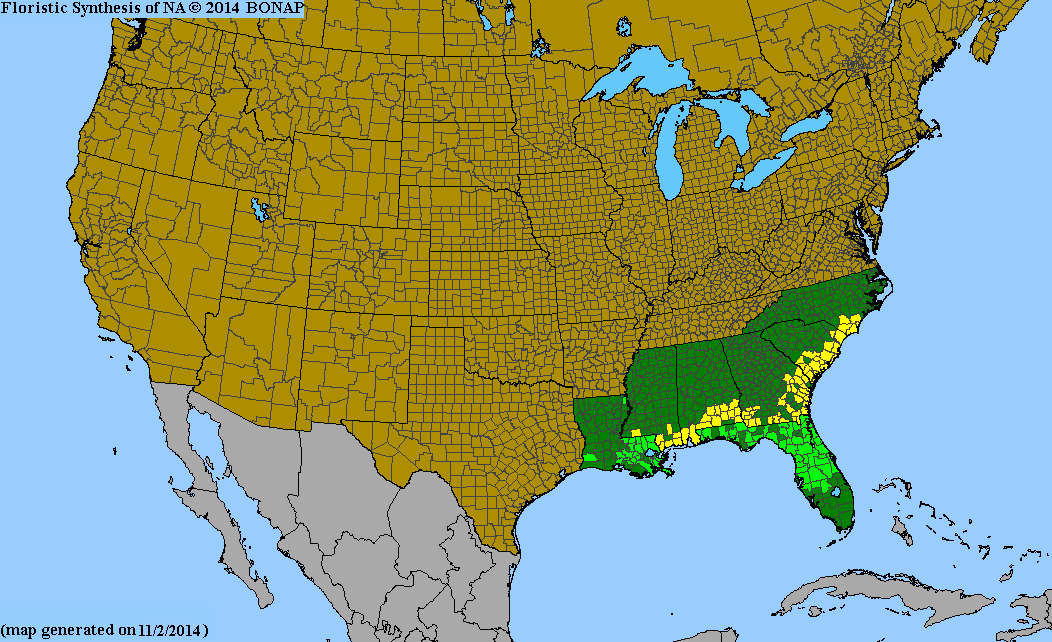
If I was in your shoes, I'd definitely try and grow Encyclia tampensis. You're right on the border of its natural limit. But you'd have to expect that, every once in a while, a particularly bad freeze might wipe out your tampensis. But if you spend $10 dollars for a tampensis, and get 5 years of enjoyment from it, then that's not the worst investment. In comparison, you only get 15 minutes of enjoyment from a $10 dollar meal.
I definitely wouldn't buy very many tampensis though. Instead, I'd buy a lot of conopseum crosses. Eplc Butterfly Kisses (Lc Trick or Treat x Epi. conopseum) isn't too shabby (photo). There's actually one available on eBay. I think it looks better than tampensis. Another cross available on eBay is Epi. conopseum x C. purpurata.
You're super fortunate that there's a vendor on eBay, bluemossguy, who regularly offers crosses with conopseum. Right now he's selling a flask of Epidendrum conopseum x Brassavola nodosa for only $15 dollars. What a great cross! I bought 3 seedlings of this cross from him a couple years ago and am really happy with them. I wish that I had gotten an entire flask. I could still do so, but it's hard to justify the purchase when I already have three plants of this cross.
Getting a flask is a good idea because you can expect some drought/temperature tolerance variation among the seedlings. The larger the pool of seedlings, the more closely suited some of them will be to your conditions. With this logic in mind, it would be optimal to sow as many seeds on your trees, and the street trees, and your neighbors' trees, as possible. I've had some success with this technique here in dry, parched and thirsty Southern California. So you should have a lot more success in rainy, wet and humid Florida.
There's a limit though to how many flowers you can personally cross-pollinate. You'd end up with a lot more seed pods if you recruited the natural pollinators. Bees are cool, but hummingbirds are the coolest. I've witnessed my hummingbirds trying to make all sorts of crazy crosses (ie Echeveria x Aloe). I've seen them visiting orchid flowers as different as Dendrobium bigibbum and Dockrillia teretifolia. Both orchids have ended up with pods.
Hummingbirds like to pollinate reed-stem orchids. Sunset Valley Orchids (SVO) sold a cross between a reed-stem and conopseum...
(Epi. Pacific Eclipse x Epi. Pacific Canary) 'SVO Yellow Sun' x Epi. conopseum 'SVO'
Not sure if there are any still available. My friend bought one and let me borrow it to try and cross it. There are two pods on it but they kinda stalled out. It does have a really nice keiki on it. The plant itself is a lot more like a typical reed-stem. But it's more stout and succulent. I think it might actually make a pretty great epiphyte.
Another orchid that hummingbirds love to pollinate is Broughtonia sanguinea. It's a really awesome orchid. Coincidentally, today I just harvested a pod that was made by a hummingbird. The plant had finished blooming a while back but when I went to harvest the pod, I noticed that the spike was just starting to produce more flowers. So you don't want to cut off a spike that's still green. This species is relatively drought tolerant, but it isn't very cold tolerant.
Sophronitis cernua is another great orchid that the hummingbirds love to pollinate. Not sure if I remember correctly, but I thought that bluemossguy sold crosses of it with conopseum.
There are lots of really fun and exciting possibilities! You can choose from numerous really different orchids. When you make your choices and attach them to trees, then nature (conditions/pollinators) can choose among them. You can then choose among nature's choices. This virtuous cycle is a cross between artificial selection and natural selection. It's so much teamwork that we can think of it as collaborative selection. Or holistic selection. Or some better term.
Way back when I used to be a species guy, but then I decided that I cared more about results. For me whether an orchid was a species or hybrid was less important than whether it thrived on a tree. Then I realized that slugs sure don't care whether an orchid is a species or hybrid! Neither do hummingbirds. Or the weather.
Nature definitely doesn't care whether an orchid is a species or hybrid. What she cares about is the conquest of space. Nature abhors a vacuum. She wants to fill Canada with epiphytes sooner rather than later. We can, and should, give her a hand.
I'm guessing that your society's input might be a little different? Heh. Variety is the spice of life. Let me know what your society says. And please share updates on your project.
Wednesday, April 19, 2017
Growing Orchids From Seed Is Easy!
Actually, in order to germinate, most orchid seeds require the assistance of a microscopic fungus. Or they need to be sown in flasks. There are, however, a few notable exceptions to this rule. Here's my reply to... growing from seed.
********************************
The Northernmost occurring epiphytic orchid in America is Epidendrum conopseum/magnoliae. It's currently in 3rd place in the Great Epiphyte Race to Canada. But it's definitely the most cold tolerant epiphytic orchid in America.
Epi conopseum isn't the showiest orchid so I would recommend finding and/or making crosses with it. Especially with reed-stem Epidendrums.
Unlike most orchid seeds, the seeds of reed-stems have enough nutrients to germinate on their own. So you can sow the seeds pretty much like you would any succulent with very small seeds (ie Echeverias).

Moss attached to a wooden board placed diagonally in a pot in a zip lock bag. Reed seeds germinating along with Rhipsalis seeds. There's also a rhizome of Microgramma vacciniifolia.

Reed protocorms with Pyrrosia piloselloides. Medium was bark with some moss on top. Pot also in a zip lock bag.

Echinocactus grusonii VS Epidendrum secundum. The Golden Barrel cactus won this round. I guess the pumice was too large for most of the reed seeds. Pot in a cat litter bin covered in clear trash bag.

Reed seedlings with Anthurium scandens seedlings. Medium was bark with moss on top. Pots in zip lock bag.
********************************
Update: 2 Oct 2018
In July I sowed some Bletilla striata seeds that I received from Fernando. Here's a recent pic...

I also included some seeds from his Begonia thiemei and/or carolineifolia.
What other orchids can grow from seed as easily as reed-stems and Bletilla striata?
Update: 13 Oct 2018
Here are some reed-stem Epidendrums from seeds that I sowed a year ago...

********************************
The Northernmost occurring epiphytic orchid in America is Epidendrum conopseum/magnoliae. It's currently in 3rd place in the Great Epiphyte Race to Canada. But it's definitely the most cold tolerant epiphytic orchid in America.
Epi conopseum isn't the showiest orchid so I would recommend finding and/or making crosses with it. Especially with reed-stem Epidendrums.
Unlike most orchid seeds, the seeds of reed-stems have enough nutrients to germinate on their own. So you can sow the seeds pretty much like you would any succulent with very small seeds (ie Echeverias).

Moss attached to a wooden board placed diagonally in a pot in a zip lock bag. Reed seeds germinating along with Rhipsalis seeds. There's also a rhizome of Microgramma vacciniifolia.

Reed protocorms with Pyrrosia piloselloides. Medium was bark with some moss on top. Pot also in a zip lock bag.

Echinocactus grusonii VS Epidendrum secundum. The Golden Barrel cactus won this round. I guess the pumice was too large for most of the reed seeds. Pot in a cat litter bin covered in clear trash bag.

Reed seedlings with Anthurium scandens seedlings. Medium was bark with moss on top. Pots in zip lock bag.
********************************
Update: 2 Oct 2018
In July I sowed some Bletilla striata seeds that I received from Fernando. Here's a recent pic...
I also included some seeds from his Begonia thiemei and/or carolineifolia.
What other orchids can grow from seed as easily as reed-stems and Bletilla striata?
Update: 13 Oct 2018
Here are some reed-stem Epidendrums from seeds that I sowed a year ago...
Saturday, April 9, 2016
Orchid Olympics
Reply to reply: Cool Growers x Warm Growers
***********************************************
Pretty much the saddest story ever... :( :( :( And there are no diminishing returns. Each time I hear this story it's just as sad as the last time I heard it.
I just looked at a map of the US. I guess North Carolina (NC) is a bit below the "mid-Atlantic coast"? Just in case you didn't know... NC is home to the Northernmost occurring epiphytic orchid in North America.... Epidendrum conopseum (EC). But, what are the chances that EC is the most cold tolerant epiphytic orchid in the world? Why should we suspect that EC is more cold tolerant than the Southernmost occurring epiphytic orchid in South America? Why should we suspect that EC is more cold tolerant than the Northernmost occurring epiphytic orchid in Asia? Why should we suspect that EC is more cold tolerant than the Southernmost occurring epiphytic orchid in... Down Under? National pride? "Our soccer team is better than your soccer team... and our epiphytic orchid is more cold tolerant than your epiphytic orchid!"
In another forum a fellow in Tampa was wondering what type of tree he should plant. While digging around for an answer I ran across these two things...
There's a line that marks the Northernmost distribution of EC. This line really isn't static! It's very dynamic. In exceptionally cold years... this line is moved South by many many miles. And maybe in exceptionally warm years... the line is moved North by many many miles. Where was this line 1000 years ago? Where is it 100,000 years ago? Wouldn't it be amazing to see an animation of this line over the past million years? Has EC even been around for that long?
It's a race to Canada! As far as tropical epiphytes are concerned... Pleopeltis polypodioides (PP) is in first place. I think it grows no problem outdoors year around in the mid-Atlantic coast? In second place is Tillandsia usneoides (TU). And in third place is EC.
PP cheats because it got a head start. TU also cheats because birds help carry it. So it's only fair that we (ie you!) help EC cheat. Just go around sowing a gazillion EC seeds in its favorite trees. If enough other people do the same thing then eventually I'll have no problem believing that EC is the most cold tolerant orchid in the world. I'll be swoll with national pride. Well... unless the other countries start doing the same thing.
I guess we'll need to start the orchid Olympics (OO)? Medals for most cold tolerant orchid? And most drought tolerant orchid? And orchid that's most attractive to hummingbirds? Poor Africa will never place in that last event! Well... they do have Disas... but there aren't any terrestrial orchids allowed in the OO!
Lots of accusations of doping? Testing for miracle grow? DNA testing for genetic purity?
Genetic purity is overrated?
What allows EC to make any real progress in the race to Canada? It's the fabulous outliers. Progress depends on difference. More difference means more progress.
Deng Xiaoping was fond of saying that it didn't matter whether the cat was black or white... what mattered was whether it caught mice. Lots of people will probably freak out if I suggest that we (ie you!) deliberately introduce hybrid ECs to the wilds of the mid-Atlantic coast. But nature doesn't care whether an orchid is a species or a hybrid. If nature cares about anything it's survival of the fittest.
Plants don't have a crystal ball. They can't predict exactly how their environment is going to change. Plants can't predict global warming or cooling or drying or wetting. Orchids aren't an exception to this rule. What makes orchids exceptional is that they are really good at hedging their bets. Orchids are really good at producing lots of seeds. A single seed pod can contain a million seeds. Each seed is a different bet... so a million seeds is a lot of different bets. It's a given that all these different bets can't be equally good. Just like ideas can't all be equally good...
It's a bad idea to facilitate the hybridization of EC? Because EC's hybrids will be less adaptable to change? Or because they will be more adaptable to change?
Yeah, your story is truly sad. But there's no reason that it can't have a happy ending! There's no reason that there can't be a wide variety of epiphytic orchids that are happy to grow outdoors year around in the mid-Atlantic coast.
***********************************************
Unfortunately for me I can only grow temperate orchids outside year round. - chibae
Pretty much the saddest story ever... :( :( :( And there are no diminishing returns. Each time I hear this story it's just as sad as the last time I heard it.
I just looked at a map of the US. I guess North Carolina (NC) is a bit below the "mid-Atlantic coast"? Just in case you didn't know... NC is home to the Northernmost occurring epiphytic orchid in North America.... Epidendrum conopseum (EC). But, what are the chances that EC is the most cold tolerant epiphytic orchid in the world? Why should we suspect that EC is more cold tolerant than the Southernmost occurring epiphytic orchid in South America? Why should we suspect that EC is more cold tolerant than the Northernmost occurring epiphytic orchid in Asia? Why should we suspect that EC is more cold tolerant than the Southernmost occurring epiphytic orchid in... Down Under? National pride? "Our soccer team is better than your soccer team... and our epiphytic orchid is more cold tolerant than your epiphytic orchid!"
In another forum a fellow in Tampa was wondering what type of tree he should plant. While digging around for an answer I ran across these two things...
It is interesting to know that for a period of 46 years this orchid has evidently escaped collectors in North Carolina. In a conversation with Professor Oakes Ames last winter he expressed the opinion that the reason for this was perhaps due to the "Big Freeze" of 1888-89 which may have destroyed these plants this far north and thus temporarily moved the limits of its northern range farther south. It is also possible that the position of the orchid high up in the trees may have made it easily overlooked. - Donovan Correll, Epidendrum conopseum in North Carolina
In December 1989, a severe cold front passed through Florida; temperatures reached -5C, killing all the orchids. At other central Florida sites, mortality of Encyclia tampensis was high (>80%). - Ronald J. Larson, Population Dynamics of Encyclia tampensis in Florida
There's a line that marks the Northernmost distribution of EC. This line really isn't static! It's very dynamic. In exceptionally cold years... this line is moved South by many many miles. And maybe in exceptionally warm years... the line is moved North by many many miles. Where was this line 1000 years ago? Where is it 100,000 years ago? Wouldn't it be amazing to see an animation of this line over the past million years? Has EC even been around for that long?
It's a race to Canada! As far as tropical epiphytes are concerned... Pleopeltis polypodioides (PP) is in first place. I think it grows no problem outdoors year around in the mid-Atlantic coast? In second place is Tillandsia usneoides (TU). And in third place is EC.
PP cheats because it got a head start. TU also cheats because birds help carry it. So it's only fair that we (ie you!) help EC cheat. Just go around sowing a gazillion EC seeds in its favorite trees. If enough other people do the same thing then eventually I'll have no problem believing that EC is the most cold tolerant orchid in the world. I'll be swoll with national pride. Well... unless the other countries start doing the same thing.
I guess we'll need to start the orchid Olympics (OO)? Medals for most cold tolerant orchid? And most drought tolerant orchid? And orchid that's most attractive to hummingbirds? Poor Africa will never place in that last event! Well... they do have Disas... but there aren't any terrestrial orchids allowed in the OO!
Lots of accusations of doping? Testing for miracle grow? DNA testing for genetic purity?
Genetic purity is overrated?
As interspecific gene flow is frequent and the new lineages were able to backcross, species cohesion is difficult to accept in orchids. Wherever lays the definition of species boundaries, it is no doubt questionable in orchids making it difficult to establish natural entities. - Yesenia Vega, Isabel Marques , Sílvia Castro, João Loureiro, Outcomes of Extensive Hybridization and Introgression in Epidendrum (Orchidaceae): Can We Rely on Species Boundaries?
What allows EC to make any real progress in the race to Canada? It's the fabulous outliers. Progress depends on difference. More difference means more progress.
Deng Xiaoping was fond of saying that it didn't matter whether the cat was black or white... what mattered was whether it caught mice. Lots of people will probably freak out if I suggest that we (ie you!) deliberately introduce hybrid ECs to the wilds of the mid-Atlantic coast. But nature doesn't care whether an orchid is a species or a hybrid. If nature cares about anything it's survival of the fittest.
Yes, change is the basic law of nature. But the changes wrought by the passage of time affects individuals and institutions in different ways. According to Darwin’s Origin of Species, it is not the most intellectual of the species that survives; it is not the strongest that survives; but the species that survives is the one that is able best to adapt and adjust to the changing environment in which it finds itself. Applying this theoretical concept to us as individuals, we can state that the civilization that is able to survive is the one that is able to adapt to the changing physical, social, political, moral, and spiritual environment in which it finds itself. - Leon C. Megginson
Plants don't have a crystal ball. They can't predict exactly how their environment is going to change. Plants can't predict global warming or cooling or drying or wetting. Orchids aren't an exception to this rule. What makes orchids exceptional is that they are really good at hedging their bets. Orchids are really good at producing lots of seeds. A single seed pod can contain a million seeds. Each seed is a different bet... so a million seeds is a lot of different bets. It's a given that all these different bets can't be equally good. Just like ideas can't all be equally good...
Individual decision making is closely connected to creativity not because all choices are excellent, but because they constitute a broad field out of which the best responses can emerge. If we wished to establish a connection to Darwinian ideas, we could say that the wide spectrum of decisions is similar to the field of the spontaneous variations of living things from which the pressure of natural selection preserves only the most apt. Without such experimental structures and behaviours, responses remain stagnant and life sinks under the weight of institutionalised routine. Freedom multiplies actions and ideas, some of which turn out to be brilliant and others fundamentally flawed. The important fact, however, is that few if any of them could have occurred under conditions of enforced conformity. To leave people alone with their projects is to permit - even to encourage - the exercise of private imaginations. - John Lachs
It's a bad idea to facilitate the hybridization of EC? Because EC's hybrids will be less adaptable to change? Or because they will be more adaptable to change?
Yeah, your story is truly sad. But there's no reason that it can't have a happy ending! There's no reason that there can't be a wide variety of epiphytic orchids that are happy to grow outdoors year around in the mid-Atlantic coast.
Tuesday, October 13, 2015
Crowdfunding Coconut Cold Tolerance
Forum thread: Crowdfunding Coconut Cold Tolerance
Last week my uncle randomly visited me here in Southern California. He lives in McAllen Texas. Not too long ago, some guy gave my uncle and his friend around 10 acres to farm. Knowing my uncle... it's probably a pretty informal arrangement. Right now their plan is to grow beets. Beets? Beets are boring! Plus... it doesn't seem like McAllen's hot and humid climate provides a comparative advantage in terms of beets. I told my uncle that the best strategy is to hedge his bets. So I gave him a bunch of Tillandsias, one Lemon Guava seedling, one small Apple Banana, one small Dwarf Brazilian Banana, four fresh Surinam Cherry seeds and two cuttings each of 5 different varieties of dragon fruit. These are crops that you probably won't find in Minnesota (one of the states where beets are commercially grown). I also told my uncle that he should grow coconuts as well! Unfortunately, I didn't have any coconut seedlings to give him. 
Here's an idea. Feel free to let me know if it's too crazy. Let's all chip in to buy coconuts for my uncle to grow! Yay or nay?
Sure, you could all chip in to buy coconuts for me to grow... but I don't even have an acre and the success rate would be way too low. We could also chip in to buy coconuts for Cindy to grow in Puerto Rico. She's got lots of land and the success rate would be very high. Too high in fact!
When it comes to making progress with discovering/selecting/creating more cold tolerant coconuts... there's a Goldilocks zone where the success rate is not too high and not too low but just right. I should probably mention that I'm defining "success" as a coconut growing to maturity and producing coconuts. What do you think the optimal success rate would be? Maybe 5%? Or 10%? Or 25%? Higher? Generally speaking... around what latitude is the Goldilocks zone? McAllen's latitude is just above 26 degrees. Los Angeles, in comparison, is at 34 degrees.
I'd be surprised if my uncle's farm is exactly in the Goldilocks zone. If somebody has, or knows of, plenty of available land that's closer to the Goldilocks zone... then please chime in. But it isn't just a matter of available and optimally located land... there also needs to be somebody willing to do the work. Although, in theory, we could all chip in to pay somebody to grow the coconuts. That would be pretty neat! Heck, we could even chip in to buy some land! All the cool kids are doing it. For example, members of the Orchid Conservation Alliance chip in to purchase land. But perhaps, when it comes to growing/testing marginal crops, some training wheels would help.
When I told my uncle that he should grow coconuts he said that he would try. But I'm guessing that this doesn't equate to him going out and buying enough coconuts to fill up an entire acre with coconut palms. How many coconut palms would fit on an acre of land anyways? And how many coconuts would have to be purchased in order to fill up an entire acre with mature coconut palms in McAllen?
The real tough question is... how many coconuts would you be willing to sponsor? A coconut a year? A coconut a month? And, are there any plants that you'd be more willing to sponsor than coconuts? Starfruit? Lychee? Pineapple? Vanilla? Durian?
When I told my friend about my uncle's farm he asked whether mangosteens would grow there. I'm guessing that they probably wouldn't. But I might be willing to chip in to buy a mangosteen for my uncle to try and grow. Unless there's adequate evidence that they will not grow there.
The problem with the mangosteen is that it doesn't reproduce sexually. This means that there's not going to be much genetic variation/diversity.... which means negligible progress in terms of cold tolerance. Buying more mangosteens or growing them from seed would closely match Einstein's definition of insanity... doing the same thing over and over but expecting a different outcome. The apple has to fall at least some distance from the tree in order for any progress to be made. With this in mind, the best strategy for coconuts would be to try and grow the widest possible variety of coconuts. Assuming cross-pollination... the result would be numerous different combinations of traits... which would increase the chances of discovering/creating combinations that are better suited for growing in Southern Texas.
Coconuts are pretty much the opposite of orchids in terms of seed quantities. One orchid plant produces more seeds than 100 acres of coconuts. Is that right? A single orchid seed pod can contain around a million seeds... and a decent sized orchid can comfortably produce around 5 seed pods. How many acres of coconut palms would it take to make 5 million coconuts? Assuming 100 coconut palms on one acre... and assuming each coconut palm produces 100 coconuts per year.... that would be 10,000 coconuts per acre. So it would take 500 acres to produce 5 million coconuts. But it would only take a few square feet on a coconut palm for an orchid to produce 5 million seeds. So how many orchid seeds would be produced if every coconut palm in 500 acres had one orchid on it?
Progress is a numbers game. The more combinations that are tested, the more progress that will be made. So it's easier to make a lot more progress in a lot less time with orchids than with coconuts. With this in mind... progress with coconuts could be increased, generally speaking, by also selecting for seed quantity in addition to cold tolerance. Selecting for precociousness would also help more quickly increase the size of the gene pool. A larger gene pool in McAllen would decrease the time necessary to develop a larger gene pool in a coconut orchard an hour or two to the north.
Of course there's no reason that cold/drought tolerant orchids and coconuts couldn't be selected at the same time! A couple months ago I sent my uncle a few orchids. One of the orchids I sent him, Laelia anceps, can be found naturally growing on trees only a couple hours drive across the border. Why hasn't this orchid naturally crossed the border into Texas yet? Where's the bottleneck? Drought? Cold? Pollinator? What other species would L. anceps have to be crossed with in order to eliminate the bottleneck?
Brassavola nodosa naturally grows on coconut palms in nature. Unlike coconut palms though, B. nodosa grows quite well in Southern California. But I'm not quite sure how nodosa would do outdoors in McAllen. It would definitely thrive in the heat... but would it survive an average winter? I'd sure like to know!
I really love the idea of a coconut plantation with orchids, Tillandsias and dragon fruit all growing on the trunks of all the coconut palms. That's two ornamental crops plus two edible crops. More crops in less space. More bang for your buck. More awesome for your acre. Intercropping for the win! Not only would there be greater productivity per acre... but there would also be more cold tolerance selection per acre.
Out of curiosity I googled something about germinating a coconut... and found this video... How to Grow a Coconut Palm from a Dehusked Coconut. I watched it and the follow-up videos... two, three and four. Pretty neat!
I do enjoy eating coconuts... but you can't eat your coconut and grow it too! From now on I'm going to be thinking about the opportunity cost of eating coconuts. Eating a coconut is a momentary pleasure. Growing a coconut in Southern Texas could yield a future benefit. Should we give up momentary pleasure for future benefit?
Generally speaking, the higher your latitude/altitude... the longer it will take you to reap the reward of chipping in for tolerance selection. If you live in Washington... then the benefit might be for your grandchildren... or great grandchildren. Do you really care if your great grandkids can grow coconuts? Maybe a few of you do. But generally speaking, the further away the benefit... the less likely it is that somebody will chip in. But the less people that chip in... the fewer coconuts that will be tested... and the longer it will take for the coconut belt to noticeably widen. Progress... will... be... oh... so... painfully... slow. I know that at least some of you out there would prefer faster, rather than slower, progress when it comes improving the cold tolerance of coconuts.
Most crowdfunding campaigns involve some form of perks. The more you chip in... the bigger the perk. What could some perks be for crowdfunding coconut tolerance trials?
One idea I like is to offer advertising as a perk. The more you donate...the more advertising you get on the PalmTalk.org website! And the more traffic your website receives from the PalmTalk website... the more money that you'd be willing to donate. Clearly this perk works better if you have a website that could benefit from having more visitors who are interested in plants. So go ahead and start a garden blog if you haven't already done so!
Coconuts could also be offered as a perk. Imagine if my uncle received enough money to buy 100 coconuts... but only one grew to maturity and produced coconuts. Clearly it would be a good idea for my uncle to grow most of these exceptional coconuts.... but perhaps a few of them could be offered to the biggest donors. I'm guessing that most of the biggest donors who wanted the coconuts would probably prefer to grow, rather than eat, them. So offering some coconuts as perks would also help us hedge our bets.
Coming up with good perks is important if we want faster progress. Incentives really do matter! I'm sure though that those of you who already live in the coconut belt would be more than happy to regularly send my uncle sprouted coconuts in exchange for nothing more than the warm glow feeling you get when you contribute to a good cause! 
Hmmm... now I'm wondering whether it's better to send my uncle money or coconuts. My first thought was that money was obviously better. Then my uncle could simply go out and buy coconuts. Why would we needlessly pay for costly shipping? But if we all sent my uncle enough money to buy 100 coconuts.... then where would he get 100 coconuts from? From the same source? That would be a problem because progress depends on difference.
But if, on the other hand, 100 of us each send one coconut to my uncle... then chances are good that they'd be from a greater variety of sources. Which would mean more progress.
Also, I kinda struggle seeing my uncle going through the process outlined in the coconut germination Youtube videos with a 100 coconuts. Maybe it would make more sense for each of us to germinate a coconut and send it to him once the threat of frost has passed. Then he would simply have to plant 100 germinated coconuts. And it's not like they would arrive all at once.
Or, rather than germinating the coconuts ourselves, we could simply purchase coconut seedlings...
It's also a really great idea for my uncle to try and grow any coconuts that are locally produced. Fortunately for us, Southern Texas has somebody who is very knowledgeable, experienced and enthusiastic about selecting coconuts for cold tolerance.... Mr. Coconut Palm! A couple years back I sent John an e-mail and we brainstormed a bit about finding a suitable space in Southern Texas to grow and test lots of coconuts and epiphytes. So this really isn't a new idea for either of us! And now, thanks to my uncle acquiring 10 acres and randomly visiting me, the idea has become a lot more tangible.
Hopefully John can get his hands on some locally grown coconuts... and then he could work with my uncle to try and provide them, and all the other coconuts that we send, with the best possible care.
According to John.... Corpus Christi, where he lives, isn't as suitable an area as McAllen... which isn't as suitable as Brownsville. So Brownsville is perhaps the closest we get to the Goldilocks zone in Texas. But a bird in the hand is worth two in the bush! If somebody does happen to have a few acres in Brownsville that they'd be happy to dedicate to coconut palms and companion crops then please let us know.
I'm sure there's a better analogy... but what comes to mind are train stations. Brownsville could be a station in Texas where coconuts might grow the best. This is where the success rate might be the highest. Some of the coconuts produced at the Brownsville station could board the train and head to the next best station... McAllen. After they grew and produced coconuts there... then some of the coconuts would take the train to the Corpus Christi station. In this way the coconuts could systematically and quickly spread across the country. And of course there'd be room on the train for other tropical plants... such as exotic fruit trees, Anthuriums, orchids, bromeliads, gesneriads and so on. This would hopefully generate broader interest and more support in the tropical tolerance project. Tropical tolerance project? I'm sure there's a better name!
Now, to be clear, this process already kinda occurs. We've all purchased plants, and been given plants, and raised plants from seed... that we've selected for cold and/or drought tolerance. Personally I've spent lots of money and time testing orchids and other epiphytes for tolerance. Given how much money and time that I've spent... and how many plants were sacrificed in the testing process... I sure like to think that I've made some progress! And I also like to think that others will be able to benefit from my progress just like I've benefited from the progress made by countless other people. But I'm pretty sure that we could make a lot more progress in a lot less time if we, as a crowd, offered a lot more support to growers/testers in Goldilocks zones. The more coconuts we send to my uncle, or whoever, in McAllen or Brownsville or in equivalently marginal locations in Florida... then the more cold tolerance progress we'll make with coconuts.
To put it more succinctly... the main difference is a matter of scale. Rather than one or two coconuts growing in a few scattered and anonymous yards in Southern Texas... let's see if we can manage to fill up one entire acre in McAllen and/or Brownsville with coconut palms. If we're successful... then we can help establish similar farms in Goldilocks zones around the world... Chile, Argentina, Australia, China, India, South Africa, Spain and so on.
So what do you think? Is crowdfunding coconut cold tolerance a crazy idea? Or is it crazy that we haven't already tried it? If our grandparents had tried it... would most of us be growing coconut palms right now?
I used a Google chart app to create a few climate diagrams...


Thursday, December 26, 2013
My Tree Aloe Agenda
Reply to: Fuzzy Tree Aloe?
********************************************
Today when I was pollinating my Mexican Laelia orchid I noticed that its pollinia was gooey. On most orchids the pollen packets aren't gooey. The sticky substance was produced by the adjacent stigma...and somehow it flowed over to the pollen. This orchid, which is probably a hybrid, has quite frequently (always?) had seed pods on it. I've suspected that perhaps a hummingbird or bee had quickly pollinated it. The flowers are quite nice so I'm usually disappointed when they wilt away only after a couple days. This is the first year that I've tried to pollinate it...and now I know that it selfs!
The flowers had already been open for a day or two...and they were starting to look a bit wilty. It seems perhaps that its pollen might have successfully arrived at the destination. For the heck of it I removed the gooey pollen packets anyways and placed some Cattleya pollinia on one of the Laelia flower's stigma.
It's so strange that the stigma produces that much goo. It's also strange that the pollen tubes can go the additional distance.
This is kinda interesting...
For the heck of it I decided to visit the Huntington a couple days ago. Remind me not to visit on the Monday before Christmas...it was packed.
Coincidentally I saw this arborescens hybrid...

It seems to be a pretty intermediate hybrid. Interestingly enough...erinacea is vaguely fluffy...but you don't really see it in the cross though. So it's not perfectly intermediate!
A few other Aloes that caught my eye...

Nice color!

I had forgotten that this is on my want list. Check out this nice shot of Aloe mawii in its habitat. Really great color! It probably greens up during the wet season but it's still pretty nice.

A cross between two winter growers. Given the vigor of Hercules...I'd definitely be interested in trying more summer/winter crosses.

Perhaps not spectacular but I definitely found it appealing. Maybe it was the nice yellow flowers and the branched flower spike. Also it's an early bloomer. Unless it's a really late bloomer?

This caught my eye even though it was pretty far away.

Some cactus because I'm a sucker for back-lighting.
I remembered that I'd also like to select for some small tree Aloes. Something that would easily fit on a table and be a perfect host for a plethora of miniature epiphytes. The closest thing that I can think of are some of the smaller varieties of Aloe ramosissima. Are there any other species that form small trees?
My Aloe tenuior is about to bloom...maybe I'll try crossing it with some of my tree Aloes. Has that already been tried?
Uhhhh, let me review my Aloe agenda...
Which goal is the easiest? Anybody is more than welcome to tackle any of these projects! :D
********************************************
Today when I was pollinating my Mexican Laelia orchid I noticed that its pollinia was gooey. On most orchids the pollen packets aren't gooey. The sticky substance was produced by the adjacent stigma...and somehow it flowed over to the pollen. This orchid, which is probably a hybrid, has quite frequently (always?) had seed pods on it. I've suspected that perhaps a hummingbird or bee had quickly pollinated it. The flowers are quite nice so I'm usually disappointed when they wilt away only after a couple days. This is the first year that I've tried to pollinate it...and now I know that it selfs!
The flowers had already been open for a day or two...and they were starting to look a bit wilty. It seems perhaps that its pollen might have successfully arrived at the destination. For the heck of it I removed the gooey pollen packets anyways and placed some Cattleya pollinia on one of the Laelia flower's stigma.
It's so strange that the stigma produces that much goo. It's also strange that the pollen tubes can go the additional distance.
This is kinda interesting...
An ovule is successfully fertilized by only one pollen grain out of (potentially) many thousands. If fertilization is performed at a sufficiently low temperature, the growth of chilling-resistant genotypes of pollen will be favored over others. These will reach the ovule first so that their genes will appear in the resulting seed. At no other stage of development can selection be made on such large numbers of genotypes. - Chien Yi Wang, Chilling Injury of Horticultural CropsSo all things being equal...an Aloe or orchid that blooms during winter will produce individuals that are more cold tolerant. Therefore, winter bloomers will move North at a faster rate than summer bloomers?
For the heck of it I decided to visit the Huntington a couple days ago. Remind me not to visit on the Monday before Christmas...it was packed.
Coincidentally I saw this arborescens hybrid...
It seems to be a pretty intermediate hybrid. Interestingly enough...erinacea is vaguely fluffy...but you don't really see it in the cross though. So it's not perfectly intermediate!
A few other Aloes that caught my eye...
Nice color!
I had forgotten that this is on my want list. Check out this nice shot of Aloe mawii in its habitat. Really great color! It probably greens up during the wet season but it's still pretty nice.
A cross between two winter growers. Given the vigor of Hercules...I'd definitely be interested in trying more summer/winter crosses.
Perhaps not spectacular but I definitely found it appealing. Maybe it was the nice yellow flowers and the branched flower spike. Also it's an early bloomer. Unless it's a really late bloomer?
This caught my eye even though it was pretty far away.
Some cactus because I'm a sucker for back-lighting.
I remembered that I'd also like to select for some small tree Aloes. Something that would easily fit on a table and be a perfect host for a plethora of miniature epiphytes. The closest thing that I can think of are some of the smaller varieties of Aloe ramosissima. Are there any other species that form small trees?
My Aloe tenuior is about to bloom...maybe I'll try crossing it with some of my tree Aloes. Has that already been tried?
Uhhhh, let me review my Aloe agenda...
- Red tree Aloes. Kinda like Aloe mawii but larger and red year around.
- Variegated tree Aloes. Just like Aloe ferox 'Daley Mist'
- Fuzzy tree Aloes. So fluffy they'll glow when backlit.
- Miniature tree Aloes suitable for a slew of miniature epiphytes.
Which goal is the easiest? Anybody is more than welcome to tackle any of these projects! :D
Friday, December 13, 2013
Sharing Plants With Cooler Friends
Comment on John Boggan's blog entry: The begonia that broke my heart
**************************************************
Wow!!! Really great post!! Super nicely documented!
Do you regret not propagating it before you tested it? I'm definitely interested in tolerance as well...but if I thought some Anthurium leaf pattern was nice enough...then I probably would have propagated it before testing its limits. And a begonia is far easier to propagate than an Anthurium (unfortunately!).
Regarding lack of heat tolerance. Kartuz recently e-mailed me a link to an issue of International Rock Gardener (PDF). It has some really neat plants...including a couple of those awesome epiphytic Gesneriads from Chile (Sarmienta, Asteranthera, Mitraria) that I would love to try and grow. The title of his e-mail..."We can't grow these"...hehe. Kartuz says that they can't handle our SoCal heat but that they grow great up in San Francisco. He's probably right but I'd sure love if he was wrong!
So personally, if I had created a Begonia as beautiful but heat intolerant as yours...then I probably would have sent it to my friend Dan Newman (Hanging Gardens) in Pacifica (it's just South of San Fran on the coast). I would also have given it to my friend Dan Yansura who also lives in Pacifica. Newman has a greenhouse full of some of the neatest plants...mostly orchids and mostly cool growers...but with some other gems mixed in. Yansura has the largest collection of tree ferns that I've ever seen...around 20 or so different species all outside year around. So so amazing to see such a wide variety of tree ferns happily growing outside year around up there...many of them from unlikely countries. Right now Yansura is in Burma with some of our other friends in the LA Fern Society! I'm so jelly!!!
I'm sure that both Newman and Yansura would have really enjoyed your beautiful Begonia...and I'd be surprised if it wouldn't have thrived in their cool coastal conditions.
Of course I'm not saying that sharing it with errrr..."cooler" friends is what you should have done...I'm just saying that it's something that I probably would have done. I guess it's just something that's worth the effort for me to share with you...to perhaps keep in mind for future reference.
Are you going to keep trying the cross? The more times you try it...the greater the chances that you'll get an individual that has the best of both worlds...right? There's certainly an opportunity cost though.
**************************************************
Wow!!! Really great post!! Super nicely documented!
Do you regret not propagating it before you tested it? I'm definitely interested in tolerance as well...but if I thought some Anthurium leaf pattern was nice enough...then I probably would have propagated it before testing its limits. And a begonia is far easier to propagate than an Anthurium (unfortunately!).
Regarding lack of heat tolerance. Kartuz recently e-mailed me a link to an issue of International Rock Gardener (PDF). It has some really neat plants...including a couple of those awesome epiphytic Gesneriads from Chile (Sarmienta, Asteranthera, Mitraria) that I would love to try and grow. The title of his e-mail..."We can't grow these"...hehe. Kartuz says that they can't handle our SoCal heat but that they grow great up in San Francisco. He's probably right but I'd sure love if he was wrong!
So personally, if I had created a Begonia as beautiful but heat intolerant as yours...then I probably would have sent it to my friend Dan Newman (Hanging Gardens) in Pacifica (it's just South of San Fran on the coast). I would also have given it to my friend Dan Yansura who also lives in Pacifica. Newman has a greenhouse full of some of the neatest plants...mostly orchids and mostly cool growers...but with some other gems mixed in. Yansura has the largest collection of tree ferns that I've ever seen...around 20 or so different species all outside year around. So so amazing to see such a wide variety of tree ferns happily growing outside year around up there...many of them from unlikely countries. Right now Yansura is in Burma with some of our other friends in the LA Fern Society! I'm so jelly!!!
I'm sure that both Newman and Yansura would have really enjoyed your beautiful Begonia...and I'd be surprised if it wouldn't have thrived in their cool coastal conditions.
Of course I'm not saying that sharing it with errrr..."cooler" friends is what you should have done...I'm just saying that it's something that I probably would have done. I guess it's just something that's worth the effort for me to share with you...to perhaps keep in mind for future reference.
Are you going to keep trying the cross? The more times you try it...the greater the chances that you'll get an individual that has the best of both worlds...right? There's certainly an opportunity cost though.
Subscribe to:
Posts (Atom)