My thread in the CactiGuide.com forum... Plant on Plant Action
**********************************************
Hi everybody!
I recently joined this forum to share a link in this awesome thread to some photos of orchids growing on cactus/succulents. Since I'm here I figured that I might as well subject you to more of my plant on plant propaganda.
How many of you grow plants epiphytically? I already know the answer...not enough of you! Everybody should grow plants on other plants. Perhaps the most accessible case I can make for doing so is that you'd increase the chances that visitors to your garden would take more photos. In technical terms...it would improve the value to space ratio. In simpler terms...visitors would have more reason to linger longer.
For example....here are a couple galleries of accidentally epiphytic cacti...one and two. As you can see there's lots of photos of cacti growing on other plants. These accidental epiphytes improved the value to space ratio. We know this is true because people lingered longer and took photos that they wouldn't otherwise have taken. The value to space ratio would have been improved even more if those accidentally epiphytic cactus had orchids, bromeliads or Tillandsias growing on them.
Last week I attended a cactus and succulent show at the LA Arboretum. Guess how many of the entries had epiphytes attached to them? Not a single one. A few weeks earlier I attended an orchid show at the Huntington. Guess how many of the entries were growing on cactus/succulents? Not a single one.
If I had to predict the future...I'd guess that the lines between plant shows will be blurred. If people only had time to go to one show...they'd pick the one that gave them the most bang for their buck. This will be the show that has epiphytes growing on potted plants. Visitors would linger longer in front of each entry...admiring the epiphyte...or the phorophyte...or both. And because each entry would have broader appeal...it's a given that more photos would be taken. Each additional photo taken and shared online would help provide the show with more publicity.
The question is...will this future happen sooner or later? Personally I hope that it happens sooner! I expect great things to happen as a result of this cross-pollination.
Not quite sure what this "holistic" show would be called. The best word that I've been able to come up with is "phorobana". There's always room for improvement though so if there happen to be any wordsmiths out there feel free to throw some other suggestions out there. One qualification is that new words should meet the google alert standard. Basically you should be able to subscribe to a google alert for the word and not be inundated with irrelevant results.
So...does anybody have any questions? Like...is Aloe ramosissima a suitable host for Angraecum aloifolium? I don't know the answer...but I'd sure like to find out! For the past couple years I've been growing several dozen miniature epiphytes on a Crassula Gollum. The Crassula has excellent drainage so I can water the epiphytes with decent frequency.
If you're interested in learning more...here's my overview of growing plants epiphytically.
Tuesday, November 11, 2014

Monday, November 3, 2014
A Hasty Case For Naturalizing Epiphytes
Reply to thread... Video of Cattleya Blooming on my Tree
***************************************
Thanks! Regarding your honest questions...well...did you ever see the SNL skit with Christopher Walken where he needs more cowbell? I guess I'm the same way with orchids on trees. When I drive around Southern California I shout out the window..."all these trees need more orchids!"
As far back as I can remember I've always been a fan of more nature. When I was a kid my mom bought me the book "Vanishing Eden". It was filled with pages and pages of plants and animals that I really didn't want to vanish. Shortly afterwards I saw Bladerunner for the first time. I really loved the movie but I really didn't want the future to look like that.
Basically, when people attach orchids and other epiphytes to trees...they help to offset the loss of nature elsewhere. There's a lot of nature being lost elsewhere...so it's not just sufficient to add plants to the ground...it's necessary to add plants to trees. Doing so helps to create a virtuous cycle.
An orchid on a tree will help widely disperse far more necessary fungus than an orchid in a pot will. Here's how I've illustrated this...

When more fungus is dispersed to surrounding trees...this increases the chances that orchid seeds will germinate on them. So more orchids on trees will lead to more orchids on trees.
Orchids and other epiphytes on trees help facilitate cascades. As we all know too well...orchids are an excellent source of food for a wide variety of "pests". But adding an orchid to a tree doesn't just provide more food for aphids, mealy bugs, slugs and bush snails...it also provides more food for the spiders, lady bugs and lizards that eat these pests. Plus, an epiphyte on a tree can provide shelter and a home for all sorts of animals. Flowering epiphytes can also provide nectar to a wide variety of pollinators.
In addition to facilitating cascades...it's important to naturalize orchids because this helps to subject them to the process of natural selection. The more orchids that sidestep this selection process...the less orchids that will be able to survive in nature. The world is constantly changing...so if nature changes in one direction...but orchids change in another direction...then in the future we will only be able to see orchids in conservatories. We're not doing anybody any favors by overly protecting orchids from cold or drought.
The orchid family is so successful because they throw a lot of seeds at nature. If we want the orchid family to continue being so successful... then we have to help orchids throw more seeds at nature. If we help throw enough orchid seeds at nature...then it doesn't matter if future conditions are colder/hotter or wetter/drier...there will be plenty of orchids that have sufficiently suitable combinations of traits.
Perhaps it's somehow inevitable that the future will have plenty of trees with orchids growing on them. I don't think this is the case though. I regularly search flickr for orchid tree...and the rate of relevant additions is pretty low. So I do what I can to try and help encourage more people to think outside the pot.
What do you think? Do I need to be so persistent? Does your individual foresight show you a future with an abundance of orchids on trees? Will the world look like more like heaven...or...?
***************************************
Thanks! Regarding your honest questions...well...did you ever see the SNL skit with Christopher Walken where he needs more cowbell? I guess I'm the same way with orchids on trees. When I drive around Southern California I shout out the window..."all these trees need more orchids!"
As far back as I can remember I've always been a fan of more nature. When I was a kid my mom bought me the book "Vanishing Eden". It was filled with pages and pages of plants and animals that I really didn't want to vanish. Shortly afterwards I saw Bladerunner for the first time. I really loved the movie but I really didn't want the future to look like that.
Basically, when people attach orchids and other epiphytes to trees...they help to offset the loss of nature elsewhere. There's a lot of nature being lost elsewhere...so it's not just sufficient to add plants to the ground...it's necessary to add plants to trees. Doing so helps to create a virtuous cycle.
An orchid on a tree will help widely disperse far more necessary fungus than an orchid in a pot will. Here's how I've illustrated this...
When more fungus is dispersed to surrounding trees...this increases the chances that orchid seeds will germinate on them. So more orchids on trees will lead to more orchids on trees.
Orchids and other epiphytes on trees help facilitate cascades. As we all know too well...orchids are an excellent source of food for a wide variety of "pests". But adding an orchid to a tree doesn't just provide more food for aphids, mealy bugs, slugs and bush snails...it also provides more food for the spiders, lady bugs and lizards that eat these pests. Plus, an epiphyte on a tree can provide shelter and a home for all sorts of animals. Flowering epiphytes can also provide nectar to a wide variety of pollinators.
In addition to facilitating cascades...it's important to naturalize orchids because this helps to subject them to the process of natural selection. The more orchids that sidestep this selection process...the less orchids that will be able to survive in nature. The world is constantly changing...so if nature changes in one direction...but orchids change in another direction...then in the future we will only be able to see orchids in conservatories. We're not doing anybody any favors by overly protecting orchids from cold or drought.
The orchid family is so successful because they throw a lot of seeds at nature. If we want the orchid family to continue being so successful... then we have to help orchids throw more seeds at nature. If we help throw enough orchid seeds at nature...then it doesn't matter if future conditions are colder/hotter or wetter/drier...there will be plenty of orchids that have sufficiently suitable combinations of traits.
Perhaps it's somehow inevitable that the future will have plenty of trees with orchids growing on them. I don't think this is the case though. I regularly search flickr for orchid tree...and the rate of relevant additions is pretty low. So I do what I can to try and help encourage more people to think outside the pot.
What do you think? Do I need to be so persistent? Does your individual foresight show you a future with an abundance of orchids on trees? Will the world look like more like heaven...or...?
Friday, October 31, 2014
Video of Cattleya Blooming on my Tree
See video description for more info.
Do you wish you could grow orchids on trees too? You can! Just grab a houseplant and attach an orchid to it. Of course not all houseplants are equally suitable phorophytes. Which houseplants make the best phorophytes? I don't honestly know. But hopefully some of you brave experimenters will be willing to try and find out.
Here are some ideas... Growing Orchids On Houseplants
Sunday, September 28, 2014
Orchid Seeds Available For Flasking
A few years ago I sowed various orchid seeds on my tree. Much to my pleasant surprise some of them actually germinated. Right now there are around half a dozen seedlings left...down from around two dozen. The largest seedling looks a lot like Laelia anceps...and I'm guessing that's what the rest are as well.
Seeing the tiny green blobs on my tree motivated me to try and pollinate more orchids. Unfortunately I haven't noticed any new protocorms on the tree. Not sure why that is. It might be because the year the seeds germinated we received more than twice the usual amount of rain. Perhaps the extra rain created a fungus feeding frenzy. Or maybe it's because I haven't sown any L. anceps seeds since then. Last year I failed to adequately hedge my bets so none of the L. anceps flowers that I pollinated developed pods. But I've also sown a few other orchid seeds in baskets/mounts and some have germinated.
This year I've been especially consistent with pollination and as a result there are quite a few pods in various stages of development. But because symbiotic germination hasn't been consistent...I'd like to hedge my bets by sharing orchid seeds with anybody interested in flasking them. Bet hedging, from my perspective, is by far the most important plant lesson.
My primary breeding goal is to make progress in terms of drought tolerance. It would be wonderful if there were more and more orchids that could thrive with less and less water. This is especially relevant here in parched Southern California. So over the past several years my primary purchasing criteria has been drought tolerance.
How much progress can be made in terms of drought tolerance? Not exactly sure...but I do know that there's always room for improvement. The orchid family's success is the direct result of each seed pod containing a multitude of chances to discover where there's room for improvement. In other words...orchids are really good at hedging their bets.
My secondary breeding goal is to make progress in terms of temperature tolerance. Most drought tolerant orchids are warm growers. I plan on crossing them with my early growers. The result will hopefully be drought tolerant orchids with a wider range of growing temps.
Basically, my overall goal is to select for orchids that are better suited to Southern California. This means selecting for individuals that are more Mediterranean. I'm pretty sure that the orchid family's gene pool is large enough to develop an epiphytic orchid that can thrive here without any supplemental water. When will this orchid be developed? That depends on the quantity of different trait combinations that are thrown at Southern California. More combinations mean less time.
Here are some pods that are available or will be available...starting with those that have been pollinated with pollen from Psychilis krugii...which is many of them.
Besides being drought tolerant (growing on a cactus)...P. krugii blooms all summer long. It successively/sequentially blooms on the same spike. As soon as one flower starts to fade...another starts to open. Having an extended blooming period is another example of bet hedging. It increases the chances that some seeds will be dispersed when conditions are sufficiently suitable. Personally, I really enjoy having an orchid that stays in bloom for so long. The flowers aren't very showy though...so it would be nice if some of the crosses were also successive bloomers but had larger and/or more colorful flowers.
I'm guessing though that the sequential blooming trait will not be dominant...especially since P. krugii isn't the pod parent. So the first generation will probably have to be crossed back onto P. krugii in order for the successive blooming trait to express itself in some of the second generation crosses.
Here are some of the orchids that I've pollinated with P. krugii pollen...
Bc Maikai?
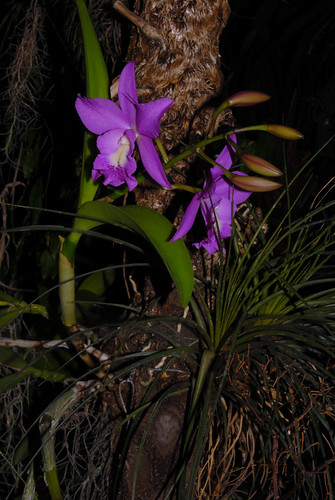
Pollinated Sept 2
Pod Sept 13
Brassavola Jiminy Cricket (Rhyncholaelia digbyana x Brassavola nodosa)
Pollinated Aug 19
Pod Aug 26
Brassavola nodosa
Pod Aug 26
Cat NOID Early Grower
Pollinated Aug 26
Flower and Pod Aug 28
Pod Sept 13
Anybody recognize this NOID Cattleya? I bought it out-of-bloom for cheap. When I saw the flowers for the first time I was a bit disappointed. They are kinda homely. But then it dawned on me that this Cattleya is one of my very first orchids to complete its growth cycle. This earned it more than a few points and TLC. I divided it this past spring which is why it bloomed later than it usually does. What happens when this C-I-W grower is crossed with a successively blooming warm grower? Perhaps future generations will have a longer blooming period than P. krugii does? Can we eventually select for an orchid that's always in bloom?
Cattleytonia Why Not 'Roundabout' (Guarianthe aurantiaca x Broughtonia sanguinea)
Pod Aug 26
Pod Sept 10 (harvested same day)
Lc Clayton Waglay var alba (Laelia anceps x C. Claesiana (C. intermedia x C. loddigesii))
Pod Aug 26
Pod Sept 13
The three orchids that make up Lc Clayton Waglay...the one Mexican Laelia and two Brazilian Bifoliate Cattleyas...are some of the very best orchids for Southern California. It shouldn't be a surprise that Clayton Waglay is a really strong grower here. Hopefully adding P. krugii to the mix will result in an even stronger grower.
Potinara Hoku Gem
Pollinated Aug 19
Pod and flower Aug 26
Pod Sept 13
Failed pods...
Caulocattleya Chantilly Lace 'Hildos' (Cattleya El Dorado Splash x Caularthron bicornutum)
Pollinated Aug 19
Pod Aug 28
Aborted Sept 2
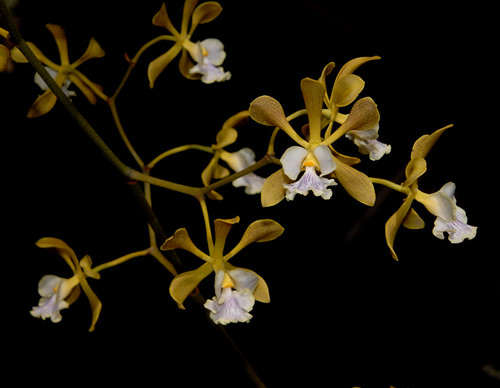
Encyclia NOID
Pollinated Aug 11
Pod Aug 28
Anybody recognize this Encyclia? Context...
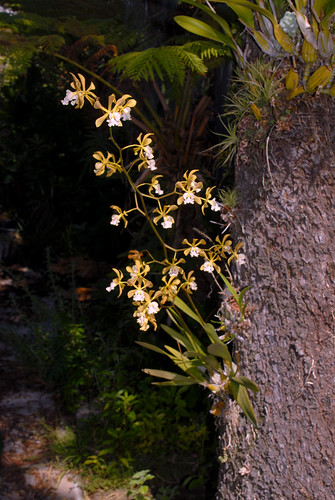
Close up...
Laelia pumila coerulea
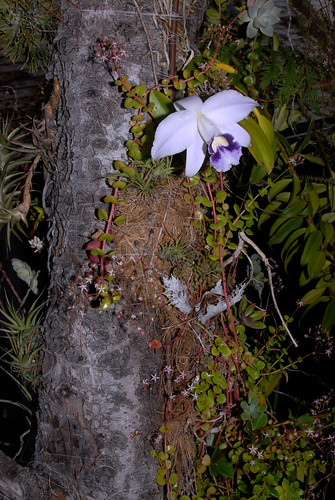
Pollinated Aug 26
Pod Sept 13
Aborted Oct 1
Rhyncholaelia digbyana
Pod Aug 26
Pod Sept 13
Harvested Sept 25
Why the really long pod? It must have lengthened after I pollinated it...right? But why? And when exactly did it start lengthening? It doesn't make much sense for the Rhyncholaelia to waste energy increasing the distance of the race course after somebody has already reached the finish line. It makes more sense to increase the course distance before anybody has reached the finish line. Making the selection process even more difficult would help ensure that the winner was fit enough...at least in terms of endurance. Given that this pod didn't have any seeds...perhaps none of the P. krugii pollen managed to reach the finish line.
Other pods...
Aerides? NOID
Pods Aug 28
Harvested Sept 17
Pretty sure that the Hummingbird pollinated it. No other monopodials were blooming at the same time...so definitely a self.
Angraecum Longiscott (longicalcar x scottianum)
1st flower - Angraecum calceolus and Vanda suavis - Aug 11
2nd flower - Cyrtorchis chailluana - Aug 19
3rd flower - N. falcata and Aerangis mystacidii - Sept 4
The first two flowers didn't develop pods...but the third has. Another example of hedging.
Pod Sept 13
Bc Maikai? x Brassavola nodosa
Pollinated Aug 27
Pod Sept 13
Brassavola nodosa x Cattleya harrisoniae
Pod Aug 26
Brassavola Jiminy Cricket x Bc Maikai?
Pollinated Sept 2
Cattleya harrisoniae x (B. nodosa and P. krugii)
Pod Sept 13
Cattleya Penny Kuroda x (Mexican Laelias, Lc Clayton Waglay var alba, P. krugii)
Pods Group A Context Aug 26
Pods Group A Aug 26
Pods Group A Sept 13
Pods Group B Aug 26
Pods Group B Sept 13
There were two pseudobulbs that had around a dozen flowers each. I pollinated around half the flowers on each spike and half of those have developed.
Dendrobium phaleonopsis? x Dendrobium Gatton Sunray (pulchellum x Illustre (chrysotoxum x pulchellum))
Context
Pod Aug 26
Dendrobium phaleonopsis? x Dendrobium hercoglossum
See above
Dendrobium phaleonopsis? x Dendrobium moschatum
See above
Epidendrum radicans spontaneous
A friend of mine has quite a few different colored Reed Stem Epidendrums. Last week, with his permission, I harvested a dozen ripe seed pods.
Lc Clayton Waglay var alba x Cattleya Penny Kuroda
Pod Aug 26
Pod Sept 13
Neofinetia falcata x _______
This N. falcata had one spike with four flowers. One Sept 4 I pollinated all of the flowers...one flower with fresh Angraecum Longiscott pollen, one flower with fresh Aerangis mystacidii pollen, one flower with not-so-fresh Mystacidium capense pollen and one flower with old Phalaenopsis pollen. Another example of hedging.
Here's a photo of the flowers on Sept 13. As you can see, only one flower developed a pod. Which of the four donors would you prefer to be responsible for the pod? Can you guess who is actually responsible for the pod?
Psychilis krugii spontaneous
My P. krugii isn't very large...so I prefer it to channel its energy into producing pollen rather than seeds. But I guess it was the hummingbird that thought differently. I could have removed the pod before it developed...but I decided not to step on the hummingbird's tiny toes. The pod might not be a self because around a foot away an Encyclia spontaneously developed a pod at around the same time.
Failed pods...
Encyclia NOID x Brassavola nodosa
Pod Aug 28
Pod Sept 13
Encyclia NOID x (Mexican Laelias, Cattleyas)
Three Pods Sept 13
On Aug 27 I pollinated nearly every flower with a mix of pollen from Mexican Laelias and Cattleyas. Given that only three pods took...I'm guessing that the Mexican Laelias pollen was too old. And given that the Cattleya pollen largely consisted of relatively fresh Penny Kuroda pollen...I wouldn't be surprised if that is who is responsible for these three pods. Unfortunately all three pods recently aborted.
For some reason it seems like I haven't had very much success with Encyclia intergeneric pollination. Earlier in the year I had two very nice Encyclia cordigera var roseas bloom. If I remember correctly I tried crossing them with Mexican Laelia pollen but pods didn't even form. Same thing with Encyclia Orchid Jungle, Encyclia fowliei and a few others. It's pretty good incentive to keep better track of pollination efforts. That way I can avoid wasting good pollen on the wrong orchids.
A recent pollination...
Epidendrum viviparum x Epidendrum secundum
Pollinated Sept 19
There are also quite a few spiking orchids that I plan to pollinate...
Hopefully my consistent pollination streak will continue and I'll have pods for days.
Anybody interested in some seeds? If so, just private message me your e-mail and I'll add it to a notification list. Whenever I harvest a pod I'll send an e-mail to the list. If you'd like to flask the seeds then you'd simply reply to the e-mail. Should demand exceed supply...priority will be based on the following criteria...
Seeing the tiny green blobs on my tree motivated me to try and pollinate more orchids. Unfortunately I haven't noticed any new protocorms on the tree. Not sure why that is. It might be because the year the seeds germinated we received more than twice the usual amount of rain. Perhaps the extra rain created a fungus feeding frenzy. Or maybe it's because I haven't sown any L. anceps seeds since then. Last year I failed to adequately hedge my bets so none of the L. anceps flowers that I pollinated developed pods. But I've also sown a few other orchid seeds in baskets/mounts and some have germinated.
This year I've been especially consistent with pollination and as a result there are quite a few pods in various stages of development. But because symbiotic germination hasn't been consistent...I'd like to hedge my bets by sharing orchid seeds with anybody interested in flasking them. Bet hedging, from my perspective, is by far the most important plant lesson.
My primary breeding goal is to make progress in terms of drought tolerance. It would be wonderful if there were more and more orchids that could thrive with less and less water. This is especially relevant here in parched Southern California. So over the past several years my primary purchasing criteria has been drought tolerance.
How much progress can be made in terms of drought tolerance? Not exactly sure...but I do know that there's always room for improvement. The orchid family's success is the direct result of each seed pod containing a multitude of chances to discover where there's room for improvement. In other words...orchids are really good at hedging their bets.
My secondary breeding goal is to make progress in terms of temperature tolerance. Most drought tolerant orchids are warm growers. I plan on crossing them with my early growers. The result will hopefully be drought tolerant orchids with a wider range of growing temps.
Basically, my overall goal is to select for orchids that are better suited to Southern California. This means selecting for individuals that are more Mediterranean. I'm pretty sure that the orchid family's gene pool is large enough to develop an epiphytic orchid that can thrive here without any supplemental water. When will this orchid be developed? That depends on the quantity of different trait combinations that are thrown at Southern California. More combinations mean less time.
Here are some pods that are available or will be available...starting with those that have been pollinated with pollen from Psychilis krugii...which is many of them.
Besides being drought tolerant (growing on a cactus)...P. krugii blooms all summer long. It successively/sequentially blooms on the same spike. As soon as one flower starts to fade...another starts to open. Having an extended blooming period is another example of bet hedging. It increases the chances that some seeds will be dispersed when conditions are sufficiently suitable. Personally, I really enjoy having an orchid that stays in bloom for so long. The flowers aren't very showy though...so it would be nice if some of the crosses were also successive bloomers but had larger and/or more colorful flowers.
I'm guessing though that the sequential blooming trait will not be dominant...especially since P. krugii isn't the pod parent. So the first generation will probably have to be crossed back onto P. krugii in order for the successive blooming trait to express itself in some of the second generation crosses.
Here are some of the orchids that I've pollinated with P. krugii pollen...
Bc Maikai?
Pollinated Sept 2
Pod Sept 13
Brassavola Jiminy Cricket (Rhyncholaelia digbyana x Brassavola nodosa)
Pollinated Aug 19
Pod Aug 26
Brassavola nodosa
Pod Aug 26
Cat NOID Early Grower
Pollinated Aug 26
Flower and Pod Aug 28
Pod Sept 13
Anybody recognize this NOID Cattleya? I bought it out-of-bloom for cheap. When I saw the flowers for the first time I was a bit disappointed. They are kinda homely. But then it dawned on me that this Cattleya is one of my very first orchids to complete its growth cycle. This earned it more than a few points and TLC. I divided it this past spring which is why it bloomed later than it usually does. What happens when this C-I-W grower is crossed with a successively blooming warm grower? Perhaps future generations will have a longer blooming period than P. krugii does? Can we eventually select for an orchid that's always in bloom?
Cattleytonia Why Not 'Roundabout' (Guarianthe aurantiaca x Broughtonia sanguinea)
Pod Aug 26
Pod Sept 10 (harvested same day)
Lc Clayton Waglay var alba (Laelia anceps x C. Claesiana (C. intermedia x C. loddigesii))
Pod Aug 26
Pod Sept 13
The three orchids that make up Lc Clayton Waglay...the one Mexican Laelia and two Brazilian Bifoliate Cattleyas...are some of the very best orchids for Southern California. It shouldn't be a surprise that Clayton Waglay is a really strong grower here. Hopefully adding P. krugii to the mix will result in an even stronger grower.
Potinara Hoku Gem
Pollinated Aug 19
Pod and flower Aug 26
Pod Sept 13
Failed pods...
Caulocattleya Chantilly Lace 'Hildos' (Cattleya El Dorado Splash x Caularthron bicornutum)
Pollinated Aug 19
Pod Aug 28
Aborted Sept 2
Encyclia NOID
Pollinated Aug 11
Pod Aug 28
Anybody recognize this Encyclia? Context...
Close up...
Laelia pumila coerulea
Pollinated Aug 26
Pod Sept 13
Aborted Oct 1
Rhyncholaelia digbyana
Pod Aug 26
Pod Sept 13
Harvested Sept 25
Why the really long pod? It must have lengthened after I pollinated it...right? But why? And when exactly did it start lengthening? It doesn't make much sense for the Rhyncholaelia to waste energy increasing the distance of the race course after somebody has already reached the finish line. It makes more sense to increase the course distance before anybody has reached the finish line. Making the selection process even more difficult would help ensure that the winner was fit enough...at least in terms of endurance. Given that this pod didn't have any seeds...perhaps none of the P. krugii pollen managed to reach the finish line.
Other pods...
Aerides? NOID
Pods Aug 28
Harvested Sept 17
Pretty sure that the Hummingbird pollinated it. No other monopodials were blooming at the same time...so definitely a self.
Angraecum Longiscott (longicalcar x scottianum)
1st flower - Angraecum calceolus and Vanda suavis - Aug 11
2nd flower - Cyrtorchis chailluana - Aug 19
3rd flower - N. falcata and Aerangis mystacidii - Sept 4
The first two flowers didn't develop pods...but the third has. Another example of hedging.
Pod Sept 13
Bc Maikai? x Brassavola nodosa
Pollinated Aug 27
Pod Sept 13
Brassavola nodosa x Cattleya harrisoniae
Pod Aug 26
Brassavola Jiminy Cricket x Bc Maikai?
Pollinated Sept 2
Cattleya harrisoniae x (B. nodosa and P. krugii)
Pod Sept 13
Cattleya Penny Kuroda x (Mexican Laelias, Lc Clayton Waglay var alba, P. krugii)
Pods Group A Context Aug 26
Pods Group A Aug 26
Pods Group A Sept 13
Pods Group B Aug 26
Pods Group B Sept 13
There were two pseudobulbs that had around a dozen flowers each. I pollinated around half the flowers on each spike and half of those have developed.
Dendrobium phaleonopsis? x Dendrobium Gatton Sunray (pulchellum x Illustre (chrysotoxum x pulchellum))
Context
Pod Aug 26
Dendrobium phaleonopsis? x Dendrobium hercoglossum
See above
Dendrobium phaleonopsis? x Dendrobium moschatum
See above
Epidendrum radicans spontaneous
A friend of mine has quite a few different colored Reed Stem Epidendrums. Last week, with his permission, I harvested a dozen ripe seed pods.
Lc Clayton Waglay var alba x Cattleya Penny Kuroda
Pod Aug 26
Pod Sept 13
Neofinetia falcata x _______
This N. falcata had one spike with four flowers. One Sept 4 I pollinated all of the flowers...one flower with fresh Angraecum Longiscott pollen, one flower with fresh Aerangis mystacidii pollen, one flower with not-so-fresh Mystacidium capense pollen and one flower with old Phalaenopsis pollen. Another example of hedging.
Here's a photo of the flowers on Sept 13. As you can see, only one flower developed a pod. Which of the four donors would you prefer to be responsible for the pod? Can you guess who is actually responsible for the pod?
Psychilis krugii spontaneous
My P. krugii isn't very large...so I prefer it to channel its energy into producing pollen rather than seeds. But I guess it was the hummingbird that thought differently. I could have removed the pod before it developed...but I decided not to step on the hummingbird's tiny toes. The pod might not be a self because around a foot away an Encyclia spontaneously developed a pod at around the same time.
Failed pods...
Encyclia NOID x Brassavola nodosa
Pod Aug 28
Pod Sept 13
Encyclia NOID x (Mexican Laelias, Cattleyas)
Three Pods Sept 13
On Aug 27 I pollinated nearly every flower with a mix of pollen from Mexican Laelias and Cattleyas. Given that only three pods took...I'm guessing that the Mexican Laelias pollen was too old. And given that the Cattleya pollen largely consisted of relatively fresh Penny Kuroda pollen...I wouldn't be surprised if that is who is responsible for these three pods. Unfortunately all three pods recently aborted.
For some reason it seems like I haven't had very much success with Encyclia intergeneric pollination. Earlier in the year I had two very nice Encyclia cordigera var roseas bloom. If I remember correctly I tried crossing them with Mexican Laelia pollen but pods didn't even form. Same thing with Encyclia Orchid Jungle, Encyclia fowliei and a few others. It's pretty good incentive to keep better track of pollination efforts. That way I can avoid wasting good pollen on the wrong orchids.
A recent pollination...
Epidendrum viviparum x Epidendrum secundum
Pollinated Sept 19
There are also quite a few spiking orchids that I plan to pollinate...
- Aerangis somalensis
- Ascofinetia Twinkle?
- Barkeria lindleyana
- Cattleya Portia coerulea
- Dendrobium bigibbums
- Dendrobium canaliculatum hybrid
- Encyclia pyriformis
- Laelia anceps
- Lc. Bowri-albida (Cattleya bowringiana x Laelia albida)
- Microcoelia exilis
- Neostylis?
- Schomburgkia splendida v cauca
Hopefully my consistent pollination streak will continue and I'll have pods for days.
Anybody interested in some seeds? If so, just private message me your e-mail and I'll add it to a notification list. Whenever I harvest a pod I'll send an e-mail to the list. If you'd like to flask the seeds then you'd simply reply to the e-mail. Should demand exceed supply...priority will be based on the following criteria...
- Return on Investment (ROI). Not unlike the Parable of the Talents.
- Bribes. There are numerous drought tolerant epiphytic orchids that I don't have.
- Public documentation. Blogging and/or posting in forums about your flasking technique will earn you points.
- Flasking experience.
- SoCal residents.
- Outdoor growers.
- Members of the Epiphyte Society, ESSC or OSSC.
Any questions? Let me try and guess a couple...
Can you buy seeds? Sure, everything has a price.
Can you have the seeds professionally flasked? Yup.
Saturday, August 2, 2014
Growing Orchids On Houseplants
Context: Growing orchids as epiphytes indoors
******************************************
You can either attach them to a dead branch...or to a live branch. My vote is for a live branch. Some possible candidates...
Acacia
Albizia
Aralia
Araucaria
Beaucarnea
Caesalpinia
Cassia
Coffee tree
Dracaena
Elm
Ficus
Hibiscus
Magnolia/Michelia
Pachira aquatica
Pandanus
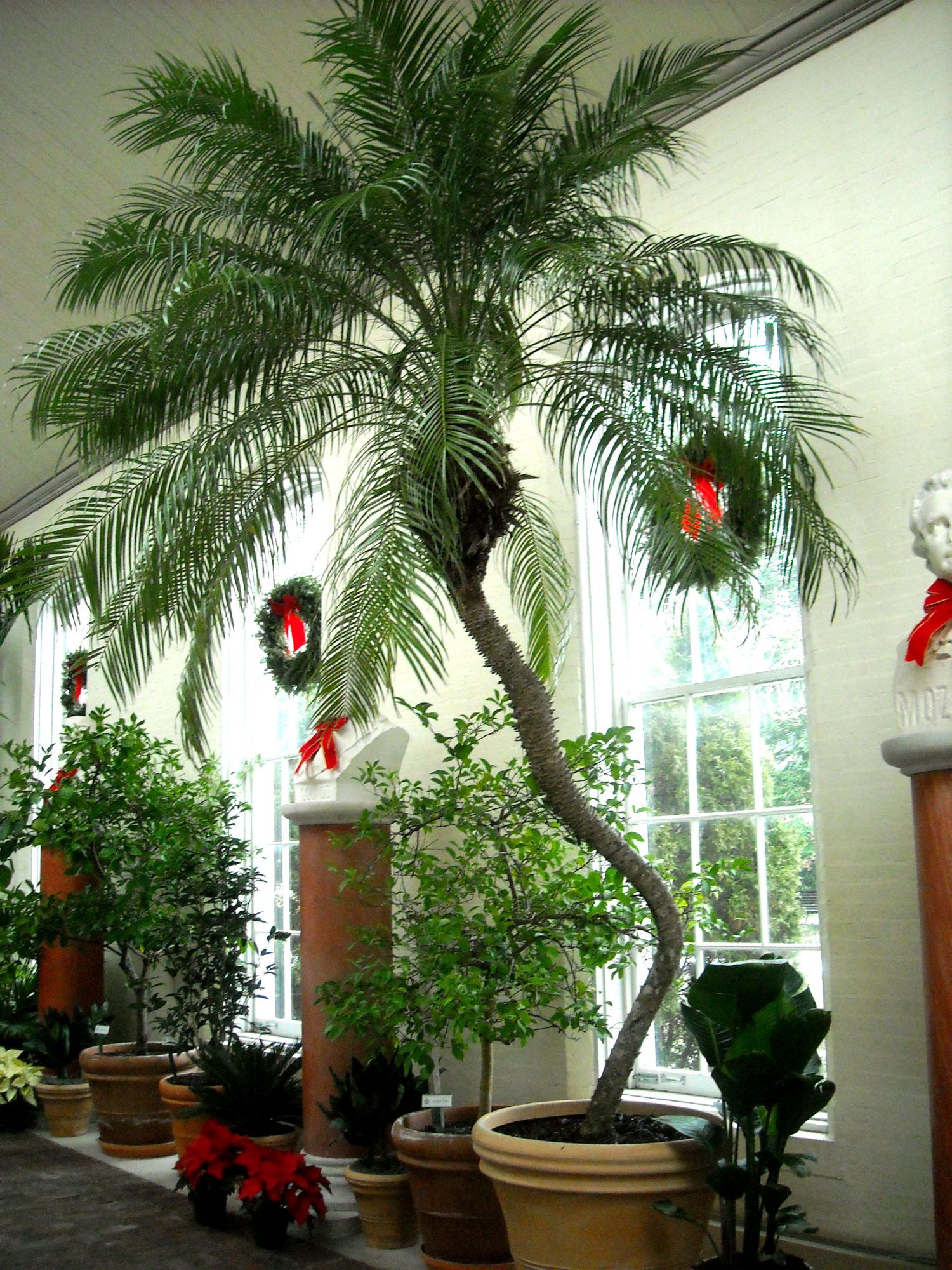
Phoenix roebelenii
Podocarpus
Polyscias
Radermachera
Samanea
Schefflera
Yucca
Clearly they aren't all equally suitable to grow inside and be everybody's phorophyte. But that's what experimenting is all about. At the last show I went to a random lady said, "if you're not killing plants...then you're not stretching yourself as a gardener".
Which of these possible phorophytes will give you the most branch for your buck? One "shortcut" is that several of them can be grown from fairly large cuttings. Another technique for greater girth is...if your climate is suitable and you have the space (and patience), you can plant the phorophyte in the ground and then dig it up when the branch is thick enough.
Perhaps for a typical Phalaenopsis the branch should be at least as thick as your wrist.
In order for the Phal's roots to attach to the branch...the orchid has to be very firmly secured. I use a slip knot method to maintain tension in the 20lb fishing line.
If you do it right...you'll be able to water two plants at once...the Phal and its phorophyte. If the Phal is thirstier than its host, then you can attach it with some moss. You can also give the host a faster draining medium. Then the orchid's roots would extend into the phorophyte's medium. Quite often bonsai growers use orchid mix as their medium.
You can always raise the phorophyte's root crown above the soil line. This will help hedge against rot and provide a bit more surface area for the Phal. Plus, then you can see two sets of exposed roots...the Phal's and the phorophytes.
In terms of watering frequency...it depends on several factors...the temperature, the phorophyte, its medium...and the quantity and type of moss you gave the Phal. Personally, I'd water the Phal as soon as I attached it...and then wait and see how many days it takes for it to look wilty. The next time I watered the Phal it would be a day or two before it was likely to show any signs of drought stress. Generally though, a newly mounted orchid will require more frequent waterings than it will when it has numerous roots (straws) crawling all over the branch. So at least initially, you'd want the phorophyte's medium to drain especially well.
It might take some tweaking to get the drainage balance right...but attaching the Phal to a live branch will definitely increase the value to space ratio. You'll get more value for the same amount of space.
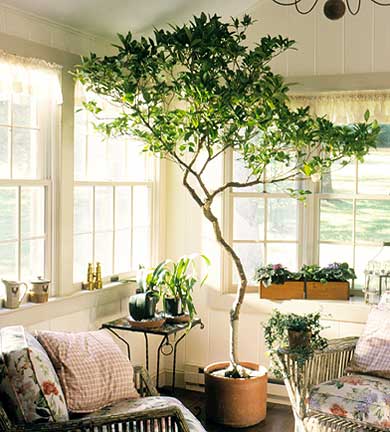
Check out these nice blank canvases...
Blank canvas 1
Blank canvas 2
Blank canvas 3
******************************************
You can either attach them to a dead branch...or to a live branch. My vote is for a live branch. Some possible candidates...
Acacia
Albizia
Aralia
Araucaria
Beaucarnea
Caesalpinia
Cassia
Coffee tree
Dracaena
Elm
Ficus
Hibiscus
Magnolia/Michelia
Pachira aquatica
Pandanus
Phoenix roebelenii
Podocarpus
Polyscias
Radermachera
Samanea
Schefflera
Yucca
Clearly they aren't all equally suitable to grow inside and be everybody's phorophyte. But that's what experimenting is all about. At the last show I went to a random lady said, "if you're not killing plants...then you're not stretching yourself as a gardener".
Which of these possible phorophytes will give you the most branch for your buck? One "shortcut" is that several of them can be grown from fairly large cuttings. Another technique for greater girth is...if your climate is suitable and you have the space (and patience), you can plant the phorophyte in the ground and then dig it up when the branch is thick enough.
Perhaps for a typical Phalaenopsis the branch should be at least as thick as your wrist.
In order for the Phal's roots to attach to the branch...the orchid has to be very firmly secured. I use a slip knot method to maintain tension in the 20lb fishing line.
If you do it right...you'll be able to water two plants at once...the Phal and its phorophyte. If the Phal is thirstier than its host, then you can attach it with some moss. You can also give the host a faster draining medium. Then the orchid's roots would extend into the phorophyte's medium. Quite often bonsai growers use orchid mix as their medium.
You can always raise the phorophyte's root crown above the soil line. This will help hedge against rot and provide a bit more surface area for the Phal. Plus, then you can see two sets of exposed roots...the Phal's and the phorophytes.
In terms of watering frequency...it depends on several factors...the temperature, the phorophyte, its medium...and the quantity and type of moss you gave the Phal. Personally, I'd water the Phal as soon as I attached it...and then wait and see how many days it takes for it to look wilty. The next time I watered the Phal it would be a day or two before it was likely to show any signs of drought stress. Generally though, a newly mounted orchid will require more frequent waterings than it will when it has numerous roots (straws) crawling all over the branch. So at least initially, you'd want the phorophyte's medium to drain especially well.
It might take some tweaking to get the drainage balance right...but attaching the Phal to a live branch will definitely increase the value to space ratio. You'll get more value for the same amount of space.
Check out these nice blank canvases...
Blank canvas 1
Blank canvas 2

Blank canvas 3
Tuesday, July 22, 2014
Value to Space Ratio - Linger Longer
The Los Angeles Fern & Exotic Plant Sale/Show is this weekend at the LA Arboretum. Are you planning on attending? Maybe?
One of the vendors, Yvette, often sells Kalanchoe uniflora. You could buy it and attach it to your tree. After a couple years it would look like this...
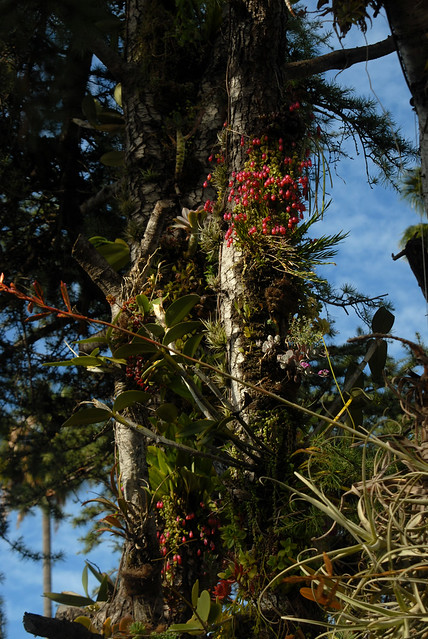
I think of it as the poor man's Sophronitis. To see what I mean, check out this photo of Sophronitis cernua blooming on a tree in Brazil. Woah!
Just as spectacular is this Sophronitis brevipedunculata blooming on my Crassula "bonsai"...
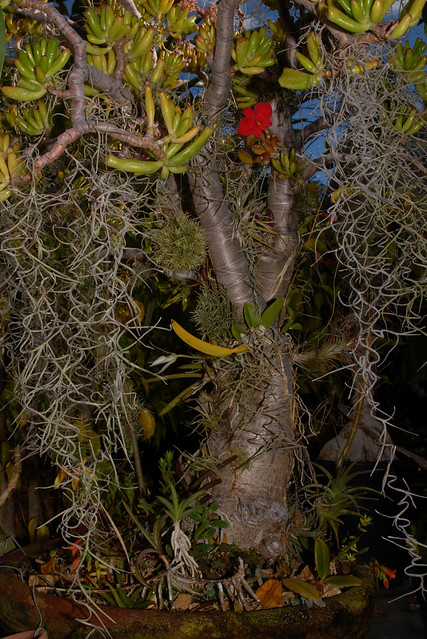
Well...maybe it's a little bit less spectacular. But it's sure more spectacular than a Crassula without an epiphyte!
More orchids on trees? Ok!
Here's Vanda tricolor/suavis, a Dendrobium kingianum hybrid and a Dendrobium nobile hybrid blooming on my Cedar tree...
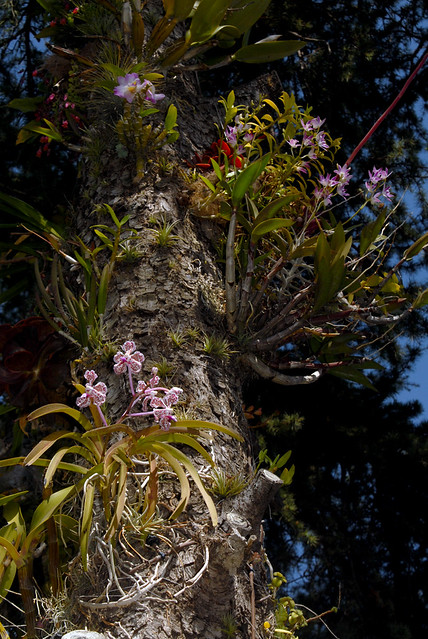
Epiphytes offer plenty of ways to improve your garden's value to space ratio. If you've attached epiphytes anywhere...then please feel free to share the photos on facebook...here and/or here.
One of the vendors, Yvette, often sells Kalanchoe uniflora. You could buy it and attach it to your tree. After a couple years it would look like this...
I think of it as the poor man's Sophronitis. To see what I mean, check out this photo of Sophronitis cernua blooming on a tree in Brazil. Woah!
Just as spectacular is this Sophronitis brevipedunculata blooming on my Crassula "bonsai"...
Well...maybe it's a little bit less spectacular. But it's sure more spectacular than a Crassula without an epiphyte!
More orchids on trees? Ok!
Here's Vanda tricolor/suavis, a Dendrobium kingianum hybrid and a Dendrobium nobile hybrid blooming on my Cedar tree...
Epiphytes offer plenty of ways to improve your garden's value to space ratio. If you've attached epiphytes anywhere...then please feel free to share the photos on facebook...here and/or here.
Tuesday, May 13, 2014
Anybody Interested In Microcoelia Seeds?
Several months ago I tried pollinating my Microcoelia exilis with pollen from a random Neofinetia hybrid. It was really not easy to do. The Microcoelia flowers are very tiny! Without a microscope or magnifying glass it was extremely difficult to try and remove the specks of Microcoelia pollinia and insert the much larger Neofinetia pollinia. After around two weeks of trying I threw in the towel.
Not too long afterwards...I noticed that some of the tiny ovaries were starting to swell a bit. And now I have around a dozen tiny seed pods on my Microcoelia.
My guess is that it's extremely likely that they were all selfed rather than crossed. I'm pretty sure that in my clumsy effort to remove the pollen I simply managed to self pollinate the Microcoelia flowers. But I could be wrong.
With most of my seed pods I just sow the seeds on my tree. But in this case, because it's not a common orchid, I'd prefer to go with the traditional method. All leafless orchids should definitely be more widely available.
Is anybody interested in the seeds? A few criteria...
1. Must be in the US
2. Must be experienced
This isn't the kind of seed for experimenting with. So if you're interested in some seed...then you must be able to provide some evidence that you've successfully germinated monopodial orchid seeds before.
Plus, I'm going to expect a reasonable percentage of seedlings in return. Maybe 10% or so. Of course there's no guarantee that the seeds are viable.
Not sure when the seed pods are going to be ready to harvest. They look like they could pop any day now. But for all I know it could still be another couple of months. I try and inspect them on a daily basis...and as soon as the first pod starts to open...I will remove all the pods.
So far Microcoelia exilis seems to be a really great outdoor leafless orchid for Southern California. I have two of them. The one with seed pods I traded for last year. This winter was pretty mild though. But my first exilis had no problem with a previous winter's temps down to 32F. Both of them bloomed this year and they started putting out new roots early in the year.
They are both mounted without any moss and located pretty high up under 50% white shade cloth. During the coldest days I water them once a week in the morning. During the hottest days I try and water them every night.
Not too long afterwards...I noticed that some of the tiny ovaries were starting to swell a bit. And now I have around a dozen tiny seed pods on my Microcoelia.
My guess is that it's extremely likely that they were all selfed rather than crossed. I'm pretty sure that in my clumsy effort to remove the pollen I simply managed to self pollinate the Microcoelia flowers. But I could be wrong.
With most of my seed pods I just sow the seeds on my tree. But in this case, because it's not a common orchid, I'd prefer to go with the traditional method. All leafless orchids should definitely be more widely available.
Is anybody interested in the seeds? A few criteria...
1. Must be in the US
2. Must be experienced
This isn't the kind of seed for experimenting with. So if you're interested in some seed...then you must be able to provide some evidence that you've successfully germinated monopodial orchid seeds before.
Plus, I'm going to expect a reasonable percentage of seedlings in return. Maybe 10% or so. Of course there's no guarantee that the seeds are viable.
Not sure when the seed pods are going to be ready to harvest. They look like they could pop any day now. But for all I know it could still be another couple of months. I try and inspect them on a daily basis...and as soon as the first pod starts to open...I will remove all the pods.
So far Microcoelia exilis seems to be a really great outdoor leafless orchid for Southern California. I have two of them. The one with seed pods I traded for last year. This winter was pretty mild though. But my first exilis had no problem with a previous winter's temps down to 32F. Both of them bloomed this year and they started putting out new roots early in the year.
They are both mounted without any moss and located pretty high up under 50% white shade cloth. During the coldest days I water them once a week in the morning. During the hottest days I try and water them every night.
Subscribe to:
Posts (Atom)