echeveria rosea
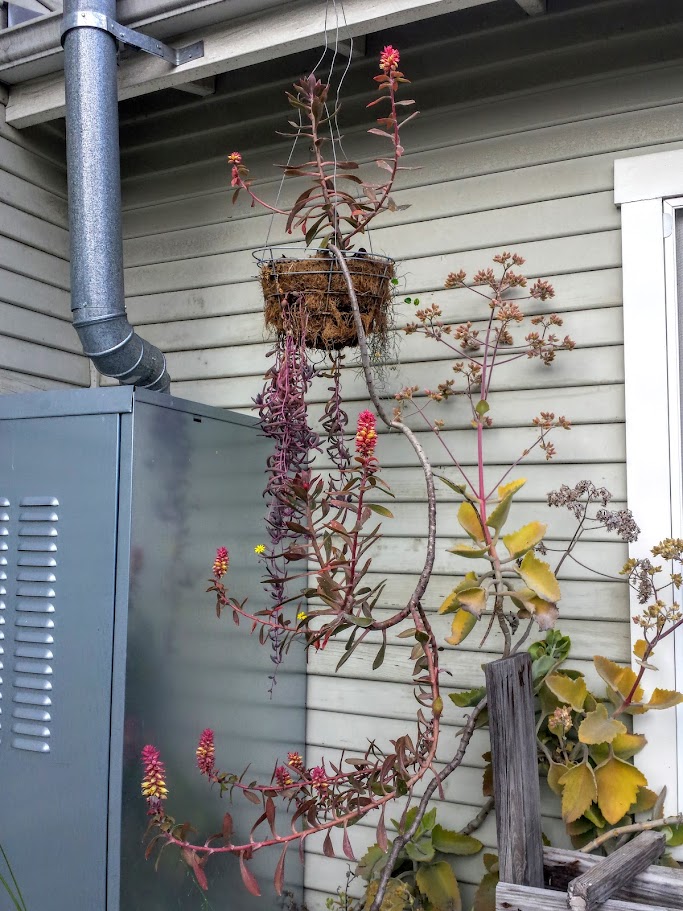

echeveria rosea x gibbiflora


echeveria rosea x coccinea
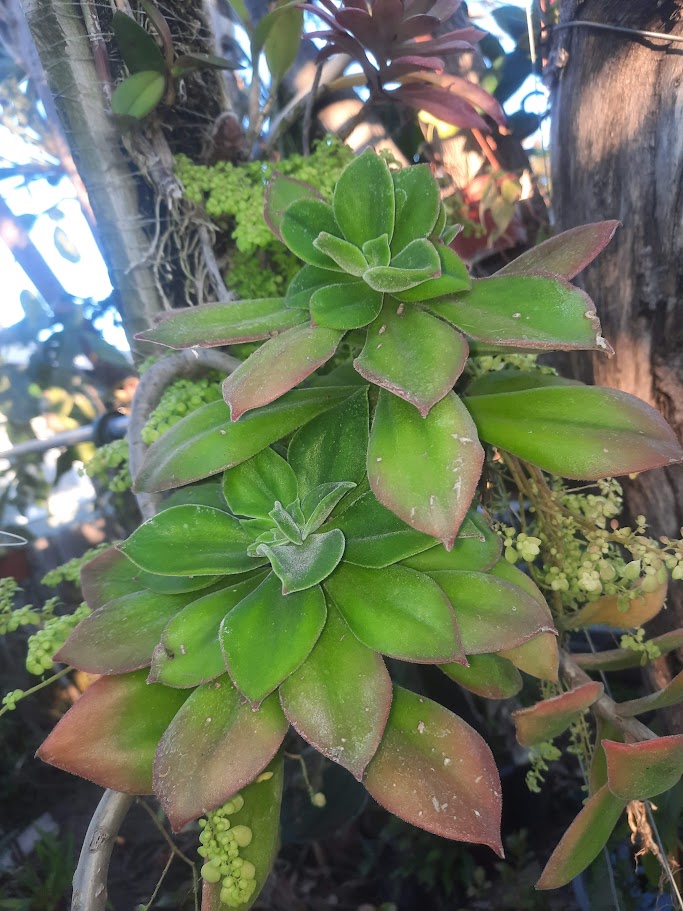

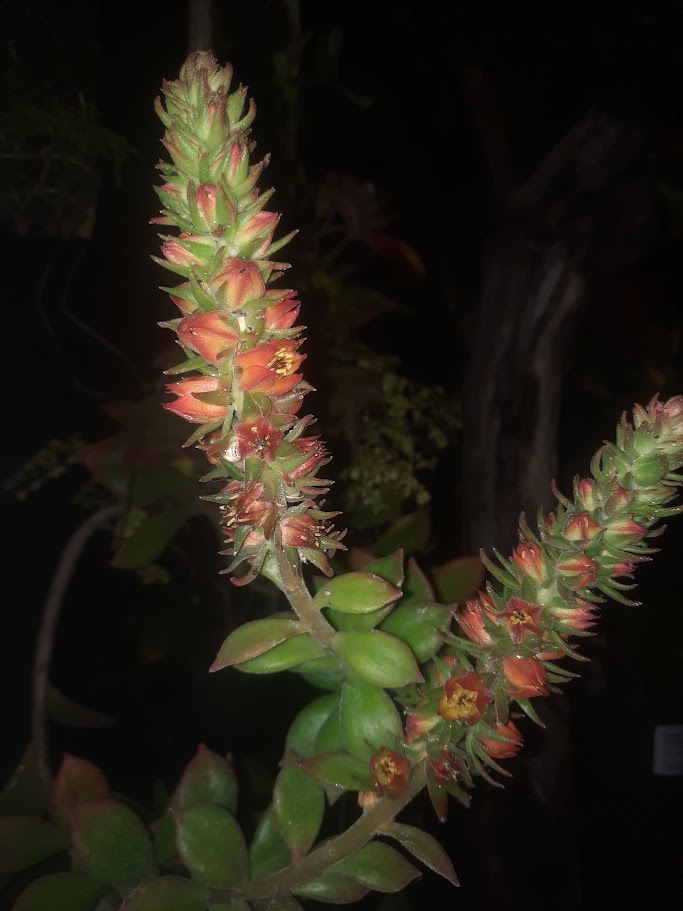
echeveria coccinea

bundle i attached to the top of my tree...
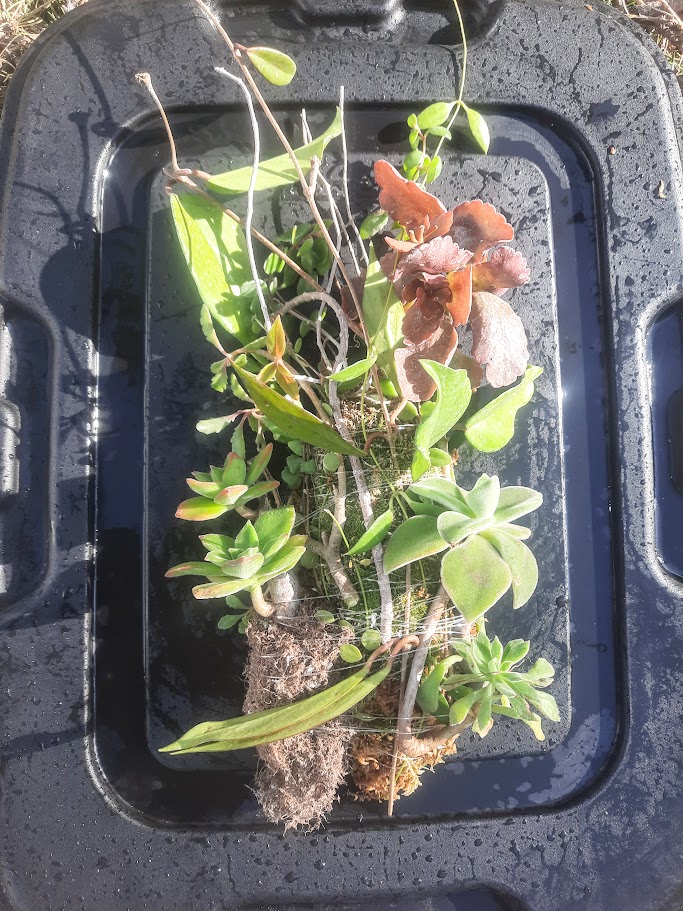
yup yup
echeveria rosea
echeveria rosea x gibbiflora
echeveria rosea x coccinea
echeveria coccinea
bundle i attached to the top of my tree...
yup yup


the tropical fruit forum doesn't have a function to upload pics. just how useful is this function anyways? the correct answer can only be determined by each forum member using their donations (to the forum) to communicate their own personal perception of this function's usefulness. in the meantime, i'll use this entry to post pics for use on the forum.
i've always grown some tropical fruit trees, but recently i've become a "bit" more interested in them. the following post is for the tropical fruit forum...optimal pot riddle.
************************************
"if you really want to give something a head start, put it in a deep, deep ass pot." - flyingfoxfruits
"after 10+ years of side-by-side tests of different pots, i'm sold on the fabric pots, at least for my conditions." - coplantnut, experiments with container-grown mangosteen in colorado
"neither, after trying both pots you mentioned and the fabric pots, I have finally switched to regular nursery pots coated with microkote." - simon_grow, which is better? air-pots versus rootmaker's rootbuilder II
when i 1st moved into my place i dug a bunch of holes to plant trees. if i was lucky i would find a marble. i'd tell my girlfriend at the time that i had a valuable surprise for her and she was nice enough to pretend to be happy to receive a random marble. she ended up filling half a jar with them.
when i 1st joined this forum a little over a year ago i have to admit that i didn't do much digging to find old but valuable threads. the other day though, when i decided to share some of my thoughts on pots, i figured it would be a good idea to 1st dig to try and find some buried treasure.
here are some of the more or less relevant things i unearthed...
side by side microkote experiment - graftingavocados
why do my jackfruit seedlings always fail? - daintree
garcinia seedlings (confessions of a repot head) - ethan
sourcing tree pots - zephian
jabuticaba: how to grow them? - huertasurbanas
greenhouse, rootmaker pots for tropicals and fruit "porn" - mark in texas
air pruning pots--opinions? - starling1
100% synthetic potting mix? - josh-los-angeles
mangosteen and lychee, growing in warm enclosure - socal2warm
did i overlook the most useful content about pots? if so, please share it. overlooking the best things in life is one of the worst things in life. like the time i went to puerto vallarta 25 years ago and overlooked luc's garcinia.
if we could use our donations (to the tff) to determine the creation and order of forum categories, how much would we donate for the topic of pots? in my previous thread i didn't include the topic of pots among the top three topics that i'd be willing to donate for. maybe that was a mistake.
prior to digging for pot threads, i had never heard of microkote before, which was curious since it seemed quite useful, but i don't remember it being mentioned in any relatively recent threads. so i googled within this site and found 1 microkote search result since 2018.
then i found 0 "semi-hydro" search results since forever.
which is more useful... semi-hydro or microkote or...?
naturally we all have different conditions, so something that is useful in wet conditions, for example, might be useless in dry conditions. optimal is relative, kinda.
a year ago i visited the salton sea for the 1st time and was intrigued that the shore consisted of a very loose mix of barnacle shells, fish bones and sand. i asked my friend whether it might make a good medium and she replied something like, no way, it's toxic! i replied, hold my beer. i found a random empty 5 gallon pot, filled it with the seashore medium, took it home and rinsed it several times. then i stuck two well callused aloe cuttings (tenuior and my tenuior hybrid) into the medium in a 1 gallon pot. for the sake of comparison i stuck two more cuttings in pure pumice and two more cuttings in cat liter (my ex left it)...

the cat liter was an obvious fail, guess it was the wrong kind. but surprisingly the salton sea medium seemed to work. here's a recent pic...

the roots...

the left two aloes were in the salton seashore medium, the two on the right were in pure pumice. the roots that were in pumice look a bit better so it seems reasonable to say that with these two aloes, and in my relatively drier conditions, pumice is a bit more optimal than the salton seashore. but perhaps in wetter conditions the seashore medium would be a bit more optimal.
This Friday, Saturday and Sunday I'll be selling some plants at the Fern and Exotic Plant Show which will be held at the Los Angeles Arboretum.
Naturally I'll be selling some mounts, for example...

This mount, which is up for auction, includes...
Here are some pics from previous shows...

Outdoor grown Hoya revolubilis specimen, one of my fav fav Hoyas.

Tillandsia flabellata. Sadly I killed mine recently, probably because I didn't mount it.

Hoya Mathilde (carnosa x serpens) outdoor grown specimen.

Platycerium andinum (left) and Platycerium Dragon, both are good outdoor growers here.

Begonia bogneri in a terrarium.
My comment on: Rapid morphological evolution in the Silvereye: random processes or selection?
*************************************
Much of this is over my head, so I'm probably not appreciating the gist of the study. Just finished reading/skimming the paper. I wish that there had been some, or any, discussion of the rather significant difference in climate between Tahiti and New Zealand.
Here in the Los Angeles area my friend and I often share plants with each other. She lives closer to the coast than I do so her conditions are more intermediate than mine. For a while now I've been wanting to try conducting a simple experiment to quantify the variation in temperature preference in a batch of seeds. We'd sow the seeds from a single pod of say Begonia fischeri (the only "weedy" Begonia here) and then split the pots. When the seedlings were a few inches tall we'd share half of the largest ones with each other. So we'd each have two batches of seedlings. Then we would compare the disparity in blooming time. The greater the disparity, the greater the variation in temperature preference, the more adaptable the species.
If you took a dozen Silvereyes from Tahiti, a dozen from New Zealand, and introduced them to two different islands in say Hawaii, we can reasonably guess that the Tahiti ones would colonize their island faster. How much faster though? The disparity would quantify the adaptability of this species. The disparity would be even greater if it was 100 rather than 12 birds initially introduced. What about if a third island was colonized with a 100 crosses between the two populations? They'd fall somewhere in the middle? Or perhaps they would win as a result of greater variation in other factors such as body/brain/beak/wing size?
Right now there's discussion, or maybe even efforts, to eradicate hybrids between native iguanas and invasive ones. The goal is ostensibly to prevent the loss of diversity. But I think the scientists are somehow missing that the very point of diversity is adaptability. It's entirely possible that the hybrids will be better than the parents at adapting to rapid climate change. Perhaps our own very existence is due to greater climate adaptability conferred by our ancestors mixing with more cold tolerant neanderthals.
